I take macaroni and cheese recipes super seriously. So many restaurants have bad mac ‘n cheese because they focus too much on creating an Instagram-worthy cheese pull by using lots of tasteless mozzarella cheese. Other restaurants cut you a brick-like serving from their mushy “cheese & pasta” casserole. I came to terms with the fact that if I want good Mac and cheese, I have to make it myself.
Overcooking the pasta and using too many cheeses (or the wrong combination of cheeses) are the two biggest mistakes that ruin this dish. To achieve a smooth, creamy cheese sauce, all it takes is the right blend of meltable cheeses and a fair amount of patience to whisk up a light roux (commonly referred to as a béchamel sauce) at a low temperature.
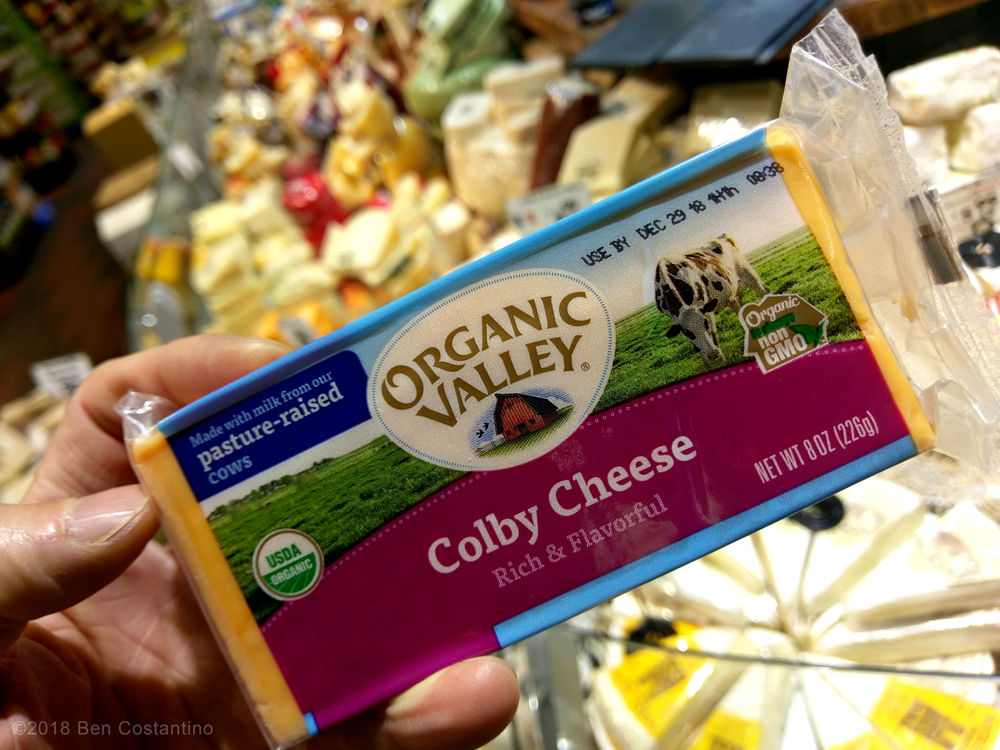
Look for plain Colby Cheese, NOT the ever-so-popular Colby Jack.
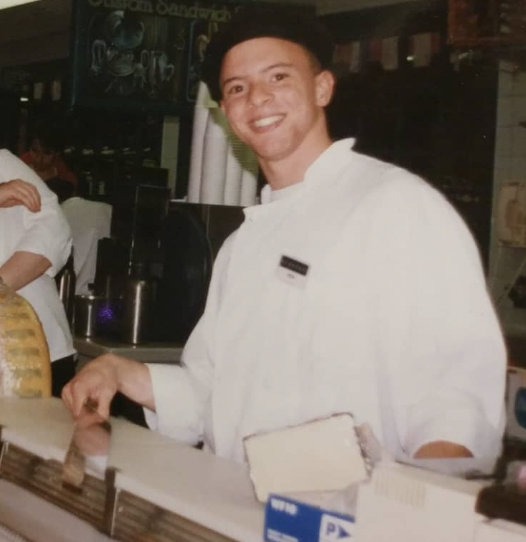
Working as a cheesemonger in college at Surdyk’s Gourmet Deli in Minneapolis.
Oftentimes in Mac ‘n Cheese recipes, people use Velveeta, creme fraiche, cream cheese, egg, or other creaming agents. But none of those are needed when you prepare a classic béchamel sauce first. And when it comes to the main ingredient (cheese), my rule is “no more than three cheeses”. More is not better. So when I see recipes boasting at their use of 7 or 9 cheeses, I give a major side-eye. In college, I worked as a cheesemonger in a gourmet deli for two years. After much cheese education, I will forever recommend the cheese combination of Colby (not Colby Jack), Gouda, and Gruyere, pictured below.
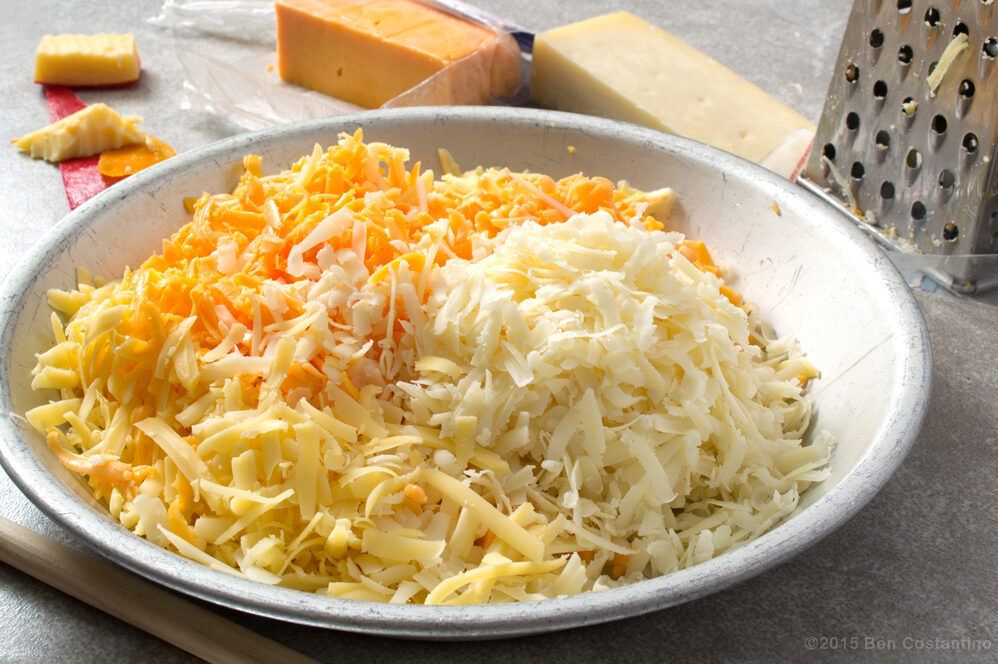
My standard cheese blend for Mac ‘n Cheese is Colby for its meltability, Gouda for its buttery richness, and Gruyere adds a nutty flavor.
Let’s talk pasta
When it comes to choosing a pasta shape, classic elbow macaroni is always my decision, and here’s why. The curved tubes are short enough to allow cheese sauce to fill up easily, and because elbows are a thin pasta shape. You shouldn’t use a thick pasta because the dish becomes too doughy and overwhelming; it takes away from the featured ingredient … the cheese sauce! For that reason, using penne is the WORST possible option. That’s also why I advise against ziti, cavatapi, or campanelle. A successful second choice for pasta and cheese pairing is mini-shells.
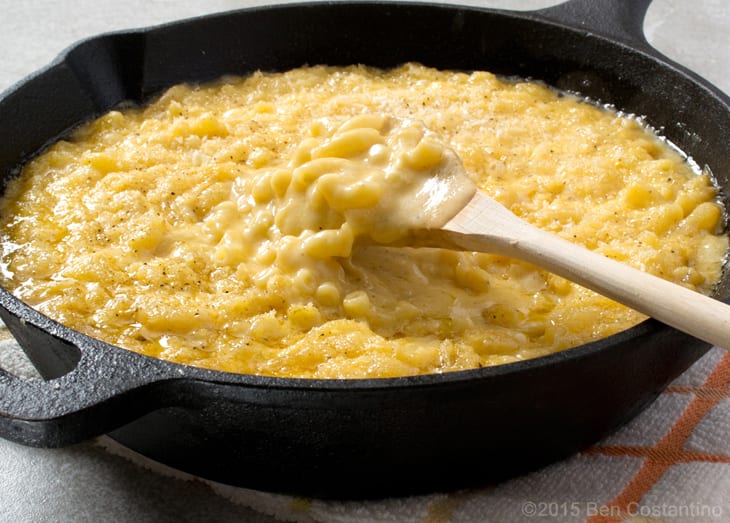
Slightly undercooking the pasta before baking (al dente) is super important to avoid a mushy skillet of overcooked Mac and Cheese. Pasta that doesn’t hold its shape eventually breaks apart, and the dish becomes too casserole-like … that’s not what we’re going for. Keep a watchful eye on your pasta as it boils and test it for doneness (or lack thereof) frequently. When testing, if your pasta is no longer slightly tough when chewed, then start a new batch of pasta. By doing so, you will end up with elbow macaroni that retains its shape, swimming in a pool of rich, creamy cheese sauce.
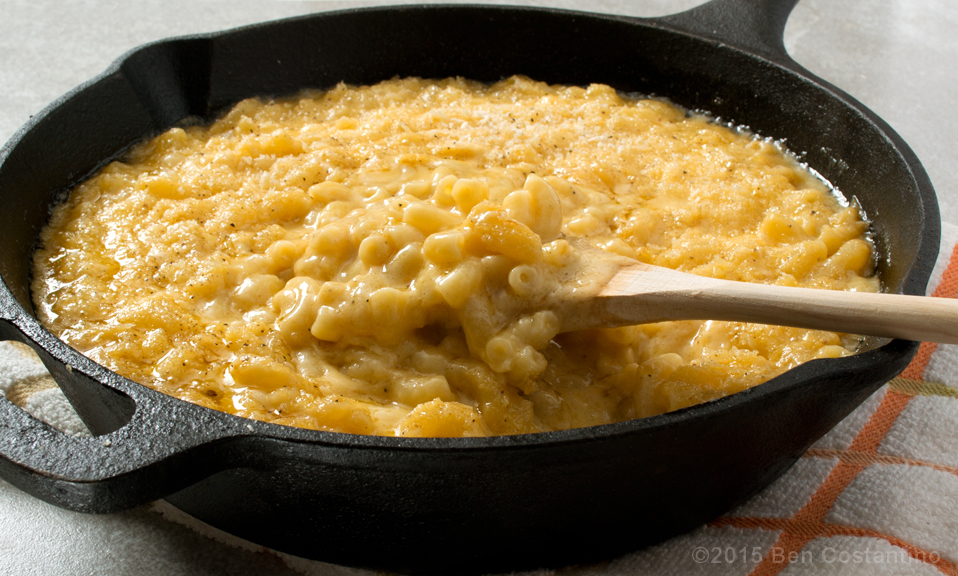
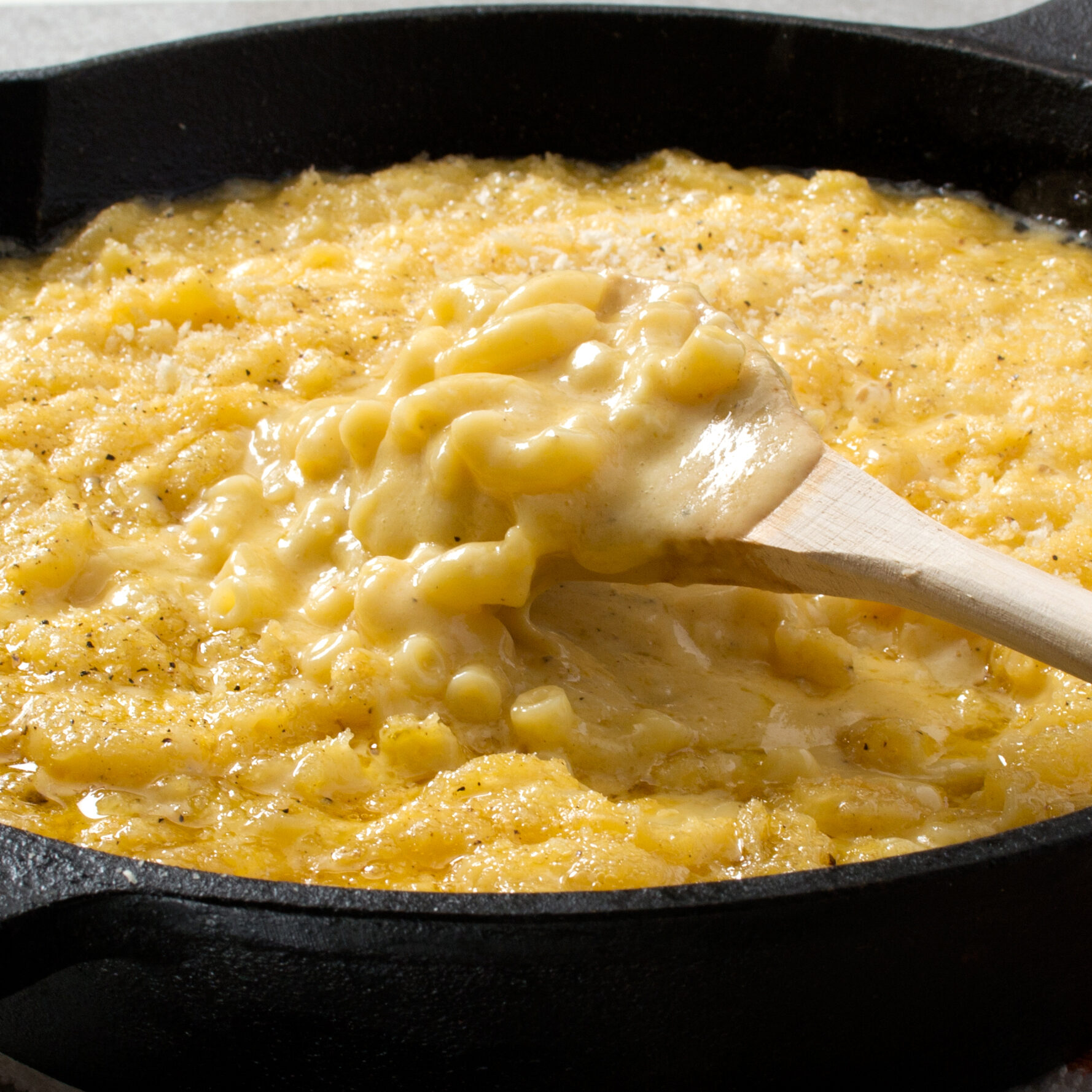
 Skillet Baked Mac and Cheese

Ingredients
- 2 cups dried elbow macaroni pasta
- 4 tablespoons + 1 tablespoon unsalted European butter, divided
- 1 cup whole milk
- 4 tablespoons all-purpose flour
- 1 teaspoon ground mustard
- 1 teaspoon kosher salt
- 1 teaspoon ground black pepper
- 4 ounces Colby cheese (not Colby Jack)
- 4 ounces Gouda cheese
- 4 ounces Swiss Gruyere cheese
- 1/4 cup panko breadcrumbs

Instructions
- In a medium saucepan, boil macaroni until half-cooked, about 5 minutes. Drain pasta, and mix in 1 tablespoon of European butter. Set aside and let cool.
- Grate cheeses and combine them into one mixture. Set aside.
- In a large saucepan, combine the remaining European butter with milk. Heat on low, stirring constantly until butter is melted and mixture is scalding, but never boiling. Add flour and stir constantly over low heat with a whisk until the roux becomes thick enough to feel some resistance when stirring and there is no trace of any flour-like texture. Fold in salt, mustard, and black pepper.
- While maintaining the low, below-boiling temperature, gradually add the cheese mixture in thirds while constantly mixing with a whisk to ensure a smooth cheesey consistency without any lumps is achieved after each addition. After all the cheese is thoroughly mixed, remove from the heat.
- Stir half-cooked pasta into cheese sauce and pour into oven-proof skillet, 9-inch round skillet, or square casserole dish. Sprinkle the top with panko breadcrumbs and extra ground black pepper if desired.
- Bake at 300 degrees in the center of the oven just until small bubbles are emerging on the sides, 15 – 20 minutes. Time might vary slightly between ovens. It’s extremely important not to overcook because the cheese will separate into a stiff and oily mess. Do not be fooled if it looks like there’s no cooking happening on the surface because a lot is happening below. It only needs to boil gently around the edges to be done.
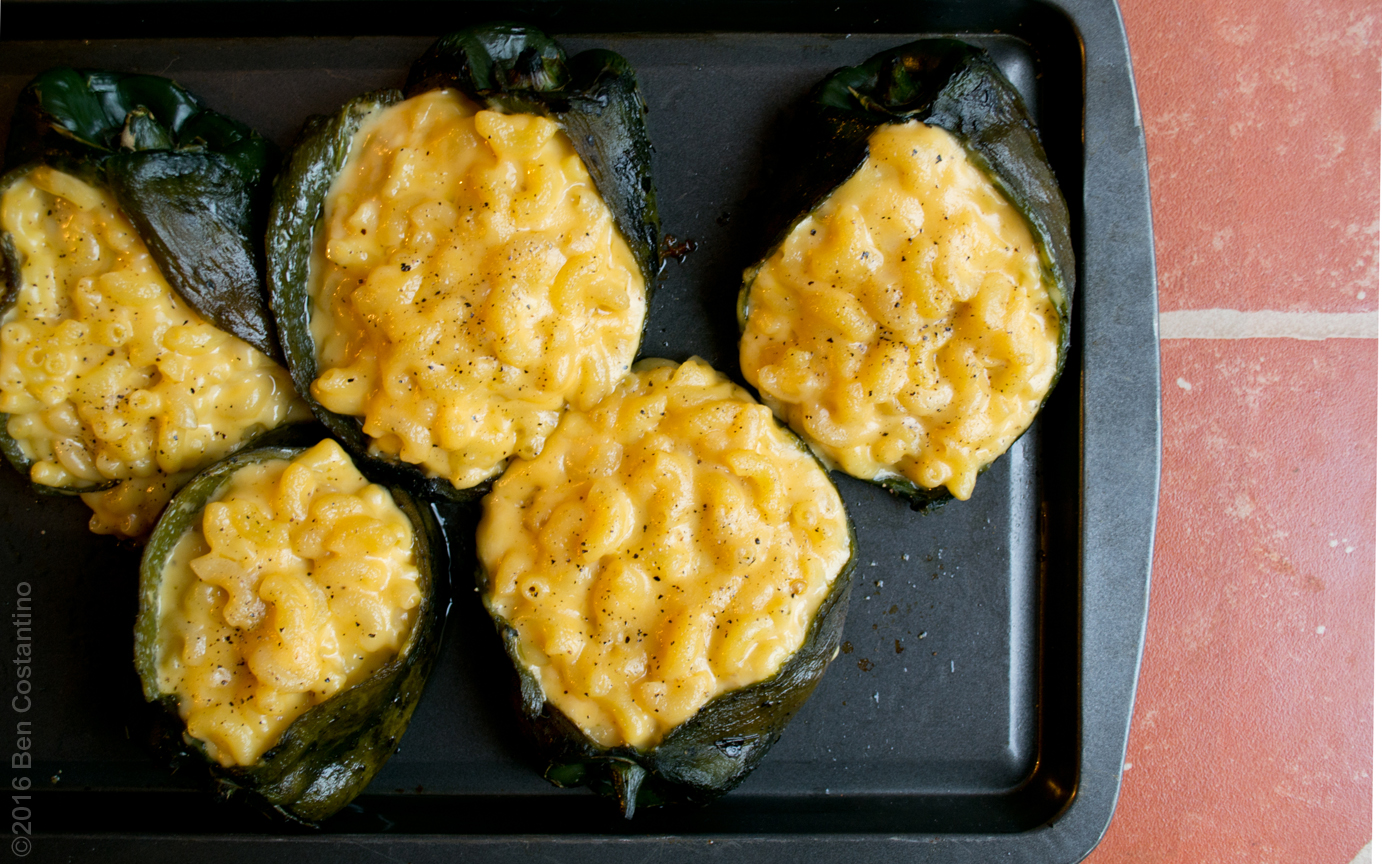
Bake Your Mac and Cheese in Poblano Peppers
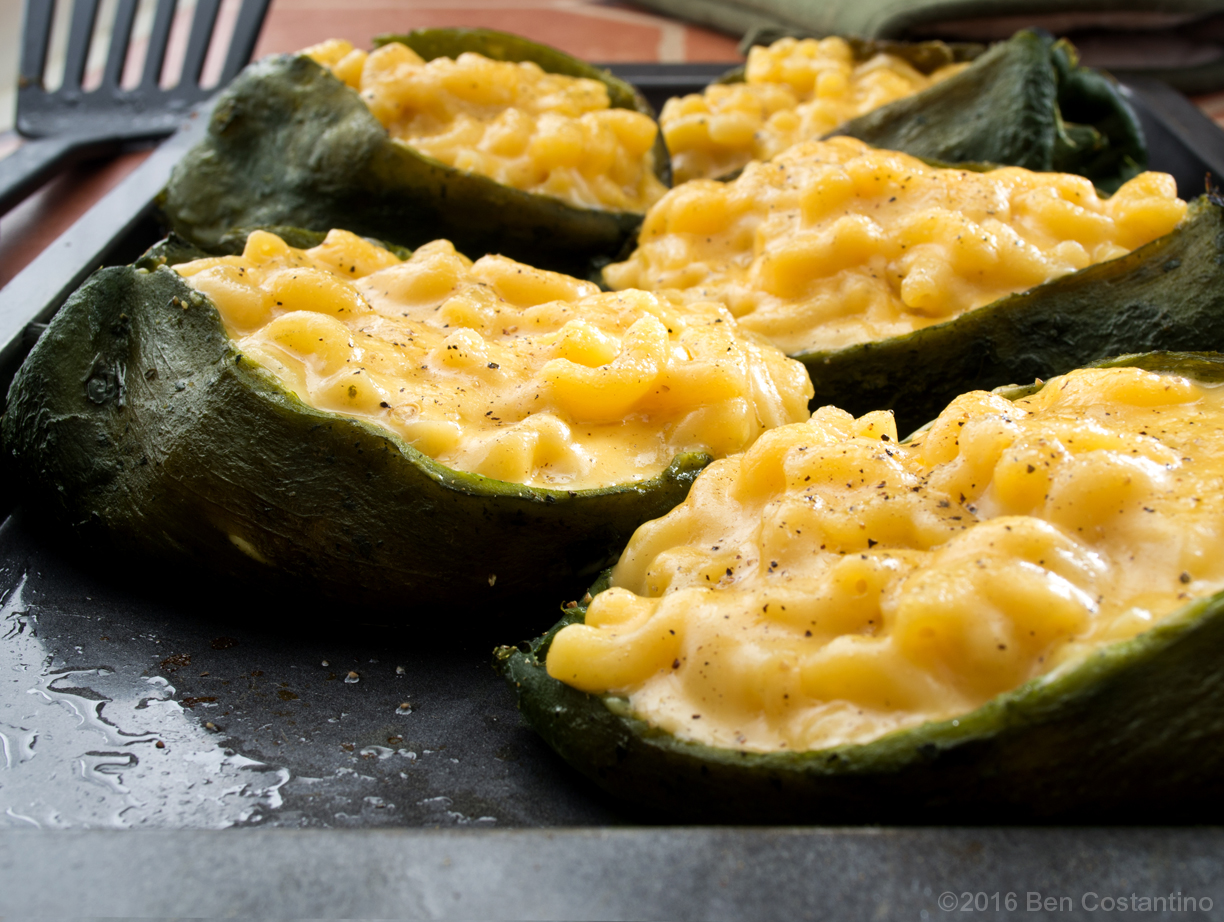
I don’t trust anyone who says they don’t love mac ‘n cheese. Once you get the technique nailed down, you can get creative with countless variations using different cheese blends and trying new serving methods. If you like a little spiciness to your food, try stuffing your Mac ‘n Cheese into Poblano peppers before baking. To do this, prepare Poblanos the day before. They can be stored in the refrigerator until they are ready to be stuffed. Simply roast them over an open flame on the stove and peel off the skins.
Ingredients
- 1 recipe of my Mac ‘n Cheese
- 5 – 6 poblano peppers
- olive oil for brushing
- kosher salt
- black pepper
Instructions
- Roast the peppers over a direct flame until skins are charred on all sides. Set them aside to cool then scrape off the skins.
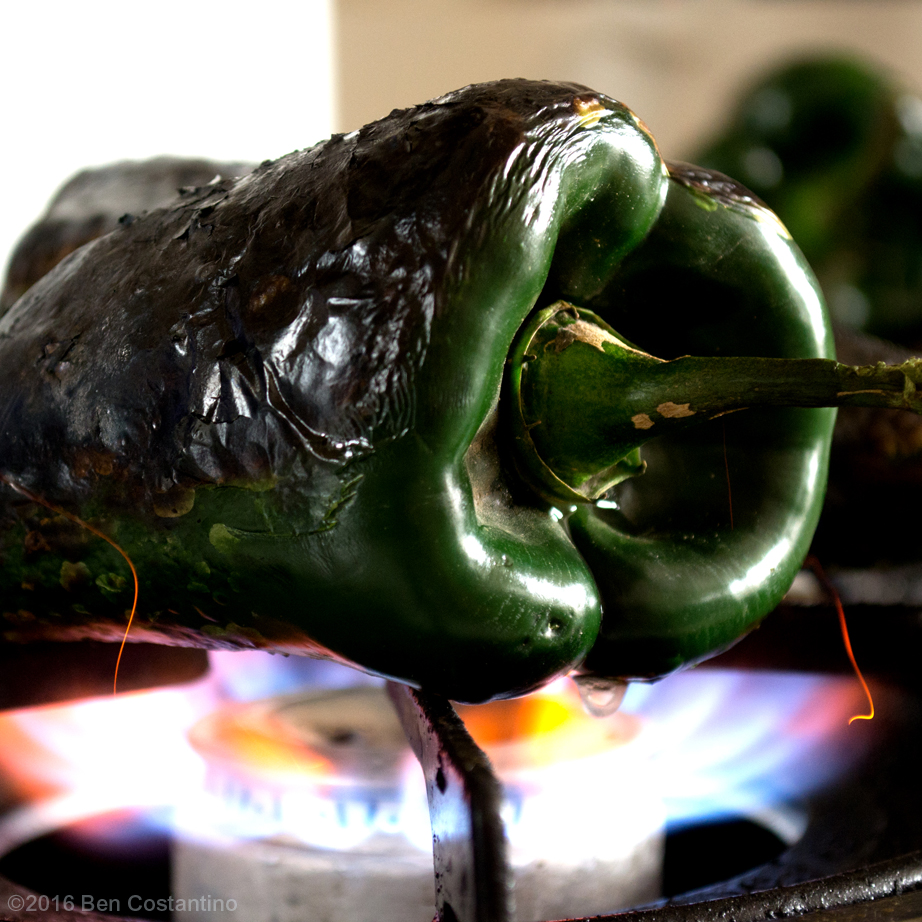
- With your hands, gently strip the skins from the flesh making sure the pepper remains as whole as possible. You can also rinse the pepper in water to clean off any charred debris. Cut one vertical slit in one side of the peppers and use a paring knife to carefully remove the inner ribs, core and seeds.
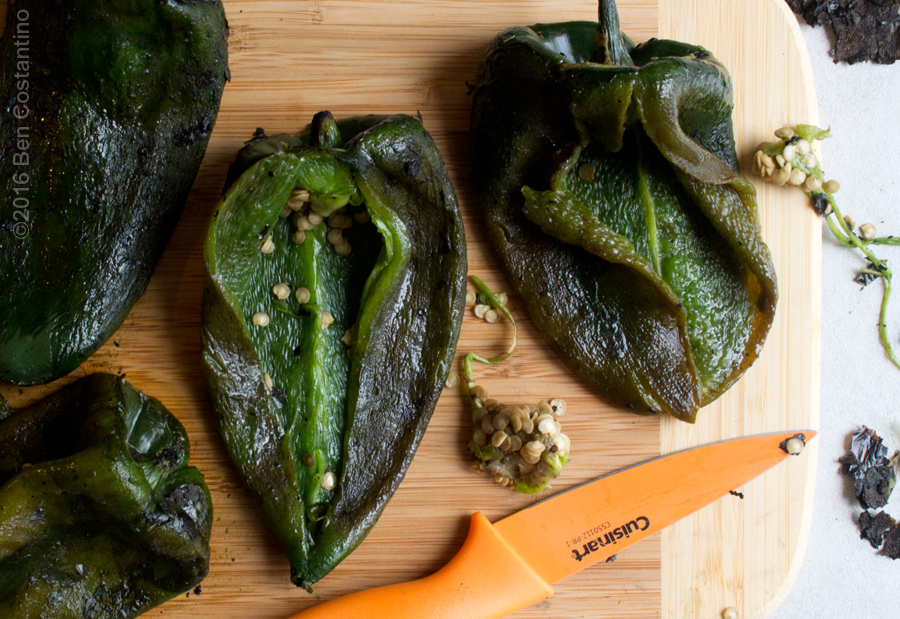
- Prepare a Mac and Cheese recipe as instructed, except use the partially cooked cheese-coated macaroni as a pepper stuffing. Brush the pepper sides with olive oil and sprinkle with kosher salt and pepper.
- Bake at 300 degrees for 15 – 20 minutes, just until the cheese starts to gently bubble on the sides.
Yield: 5 – 6 peppers