What Ben’s Growin’
This page is my “container gardening tips for beginners”, because I had little idea what I was doing when I first attempted growing food in 2018. Now, I’m simply sharing what I learn each year.
Tap a season for tips.
Summer 2022
Sungold cherry tomatoes, banana peppers, Tabasco peppers, thyme, sage, eggplant, Shishito peppers. Heirloom tomatoes
Spring 2022
endive, spring mix lettuce
Summer 2021
Cayenne peppers, banana peppers, thyme, sage, bell peppers,
Ichiban Japanese eggplants, Sungold cherry tomatoes, Husky Red cherry tomatoes
Summer 2020
heirloom cherry tomatoes, sage
Summer 2019
Sungold cherry tomatoes, Tabasco peppers, Shishito peppers, kale
Summer 2018
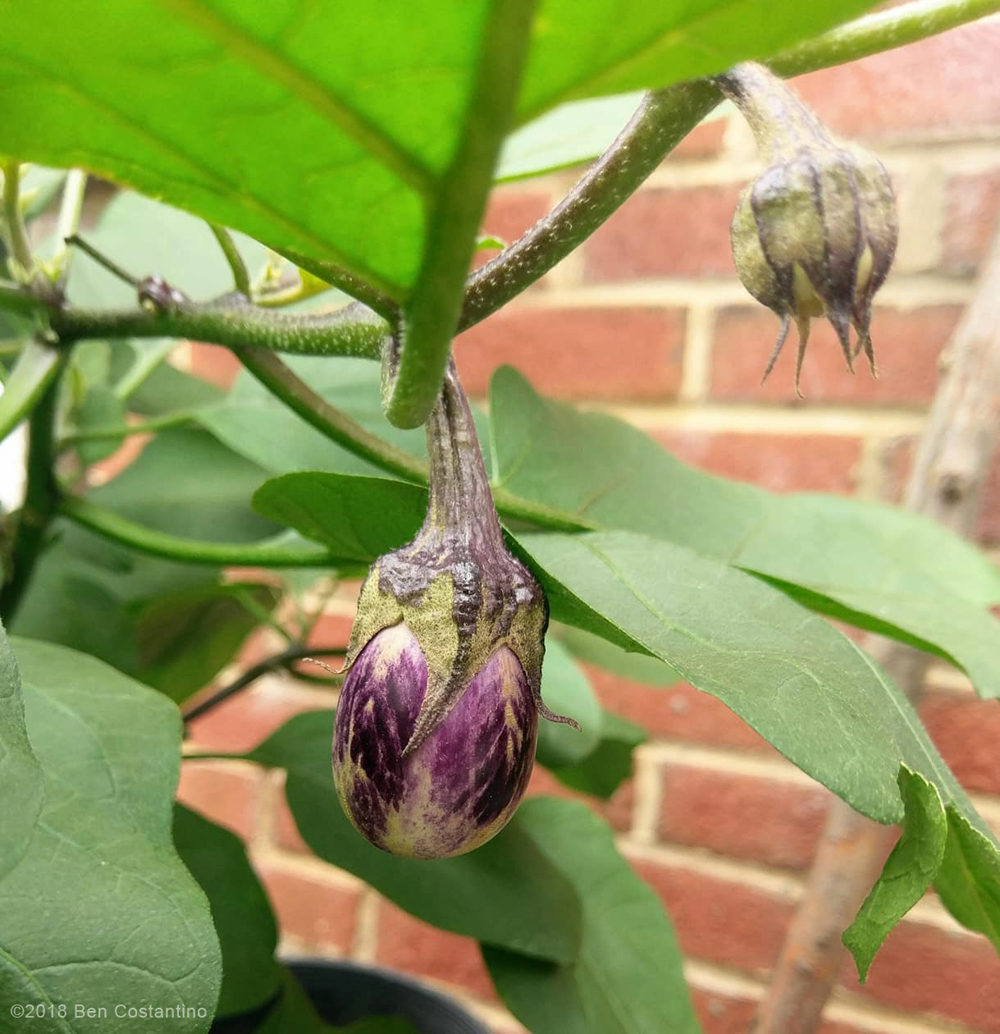
collard greens, baby eggplant
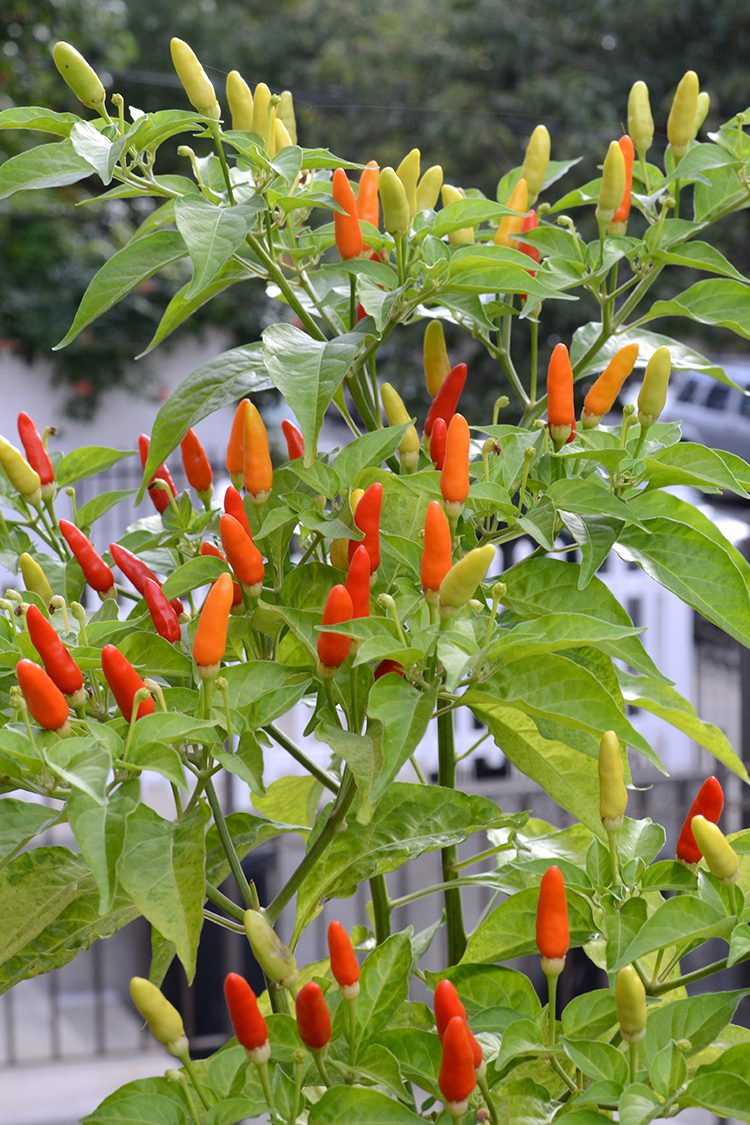
Homegrown Tabasco peppers.
Every home cook loves fresh ingredients. So container gardening on my NYC balcony is a no-brainer. Having grown up with my father gardening in the back yard, I wanted to introduce homegrown food into my cooking during the growing seasons. When you have limited space in an urban environment there are unique challenges to overcome, so I’m sharing my gardening tips as I learn.
My overall basic tips for small space container gardening are:
- Choose tiny crops, and be okay with harvesting smaller versions of crops.
- Don’t compare your container garden to other peoples’.
- Stay optimistic.
- Use appropriate fertilizers.
- Apply mulch (I used wood chips used for barbecue).
Growing in containers means smaller root systems, which will limit the size of your crops. Do no not expect large veggies. Cherry tomatoes, baby eggplant, and any variety of tiny peppers work best. And just be okay with harvesting miniature versions of veggies, they’re oh-so flavorful. If there IS a way to get larger crops in containers, then I just haven’t figured it out yet.
Comparing your garden to other people’s is never a good idea, simply because each outdoor space has its own micro-climate. Other factors come into play, like reflective surfaces from buildings. And most growing instructions call for 6 hours or more of sunlight per day, but do NOT let that stop you. I only receive 5-ish hours of sunlight and things STILL grow because plants are resilient. So, stay optimistic!
before container gardening…
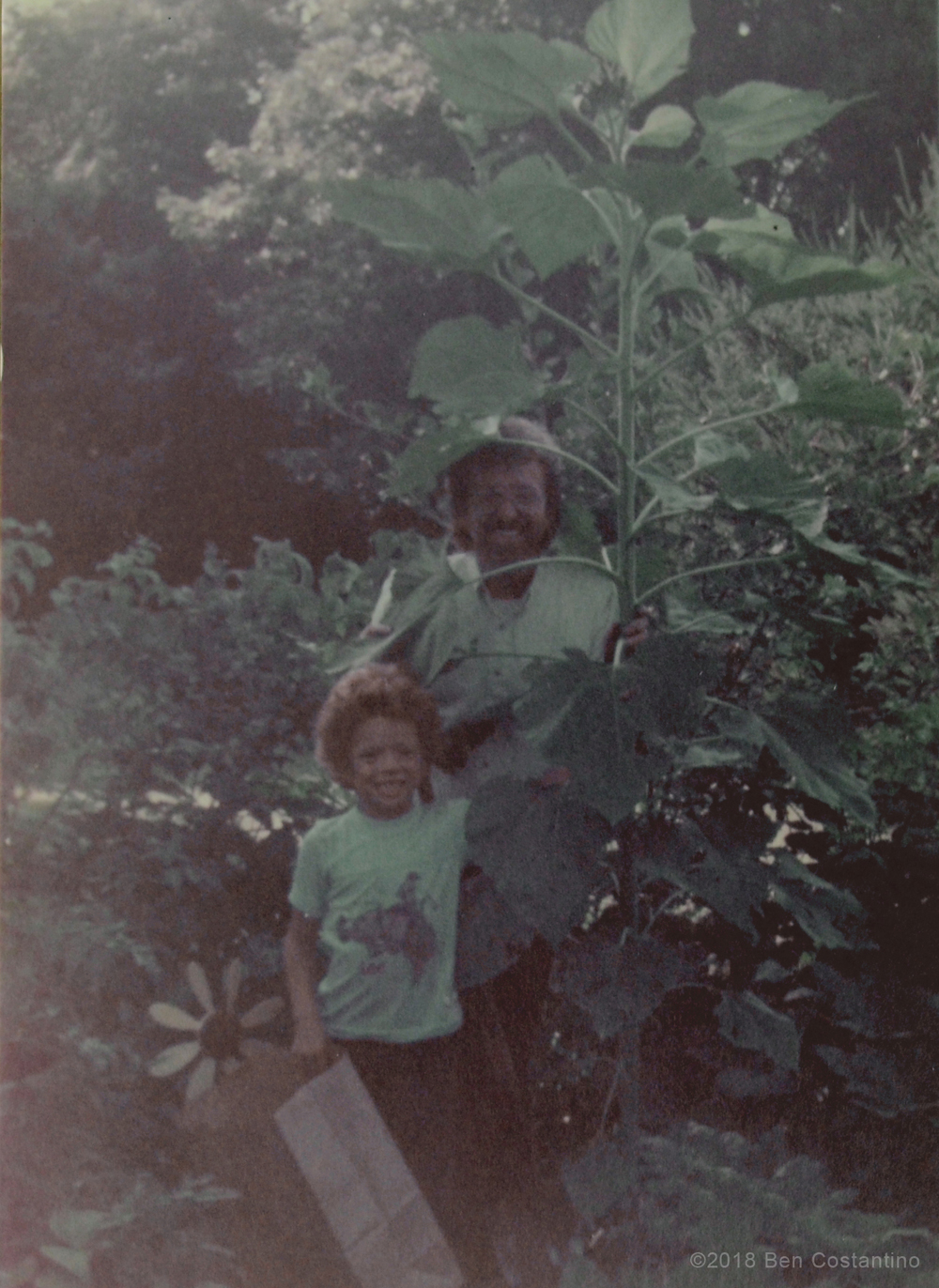
My dad got me curious about gardening at a young age and nowadays I call him frequently to ask random questions.
Even though I live in one of the most urban cities in the world, I’m really a country boy from small-town Rhode Island at heart. As a kid I casually watched what my dad did in his garden as he would lead by example. I still call him for advice to this day and one consistent thing he says is … “Well, give it a try!”
Being around nature is where I’m happiest … in contrast with the slick and modern landscapes of the city in which I live. Therefore, when I moved to Astoria, Queens I chose an area that could get me closest to some grass, trees, water, and birds chirping far away from the sounds of the subway. A quaint area near Astoria Park is where I landed.
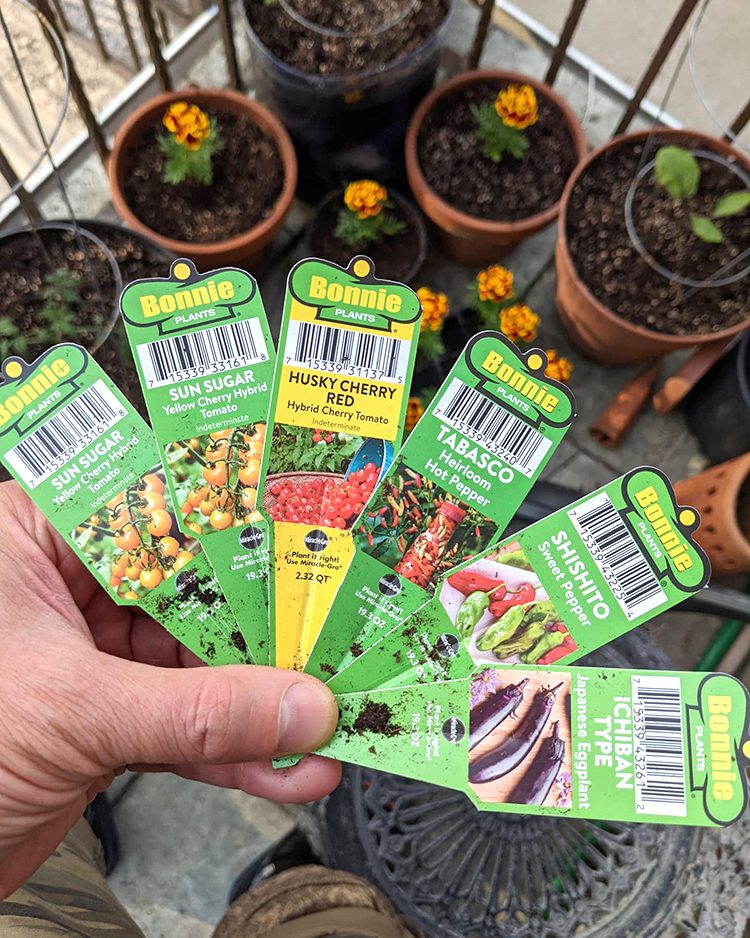
When buying seedlings for container gardening, consider theses smaller crops like cherry tomatoes, Tabasco peppers, Shishito peppers, and Ichiban (Japanese) eggplants and use 3 or 5-gallon containers.
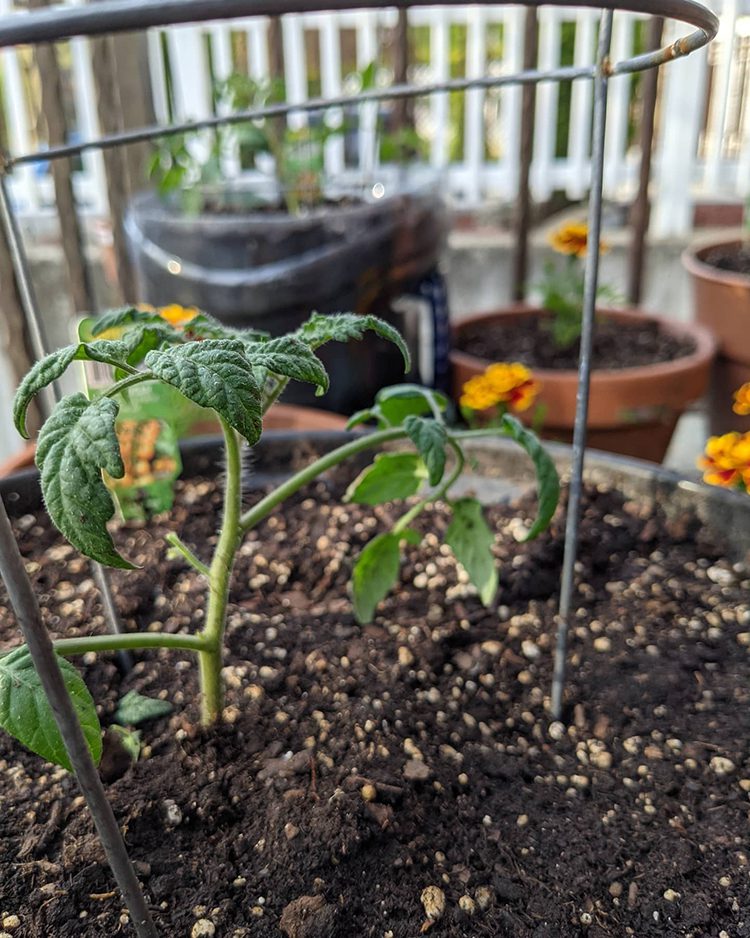
Be optimistic!
Summer 2022
Tabasco peppers, banana peppers, thyme, sage, dill, Shishito peppers,
eggplant, Sungold cherry tomatoes, Heirloom tomatoes
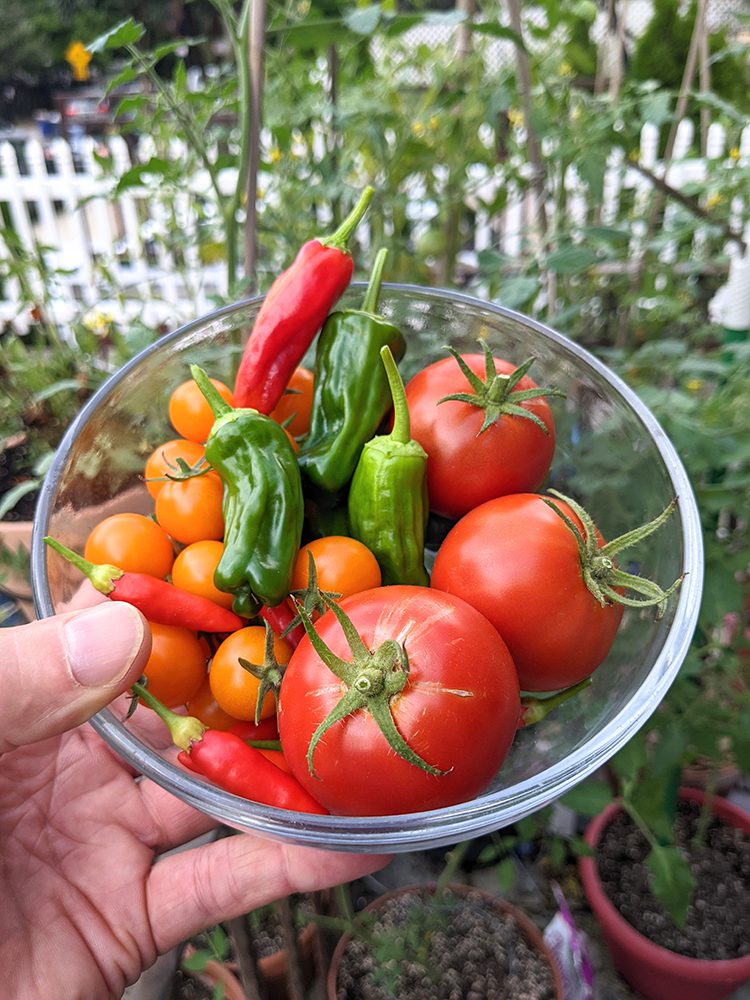
My first Summer 2022 harvest using 3-gallon and 5-gallon containers.
Beneficial insects, companion planting, and mulching were the main lessons learned from this growing season. From watching lots of James Prigioni on YouTube I learned how to use mariolds to attract ladybugs and other good critters that naturally kill pest … especially aphids. And the mulching technique from watching my container gardening authority, Gingerfoot Garden inspired me to put my unused barbecue wood chips to better use as mulch.
Also some more growing from a seed happened with thyme, sage, and Heirloom tomatoes. Seeds started growing indoors in early March.
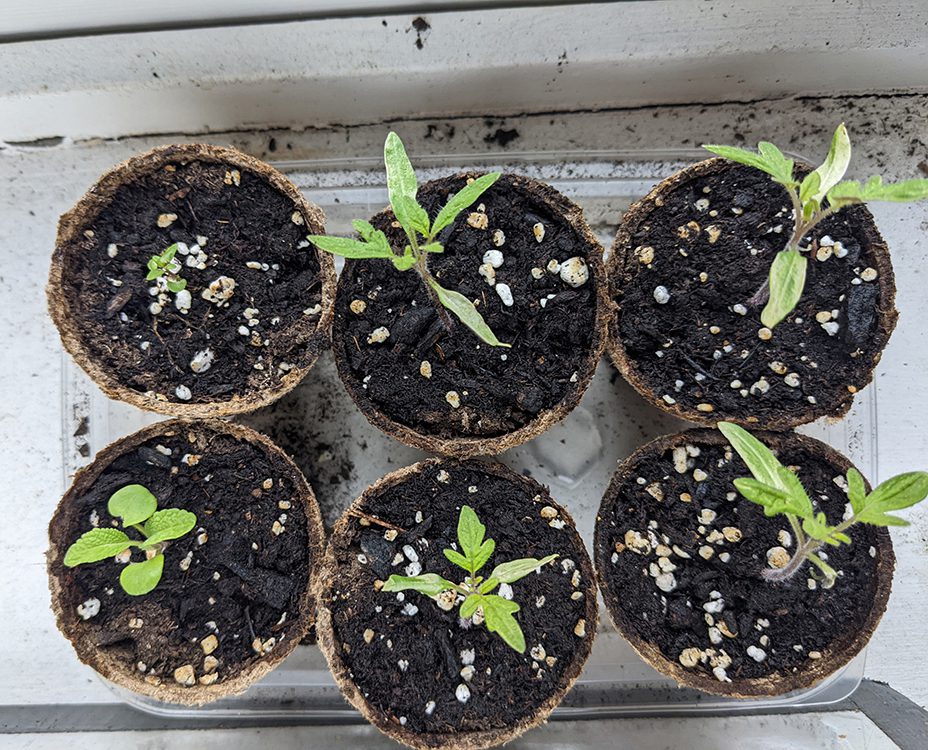
Summer container gardening in 2022 began by planting seeds in my window sill in early March,; (clockwise from upper left) Thyme, 4 Heirloom tomato plants, and sage.
what I learned
- Eggplants do not like hot temperatures. It was my first time growing full-sized eggplants and 12 of the flowers fell off during a heat wave. The plant never recovered and nothing else grew. Only two eggplants were harvested.
- Even with 5 gallon containers, some veggies will still not grow large. Banana peppers, heirloom tomatoes, and large variety eggplants were still dwarfed.
- Pruning the Shishito peppers was successful, but the yield was very similar to the unpruned plant from 2019. Yes more peppers were flowering, but more droped off. I think it was due to the roots being limited in containers.
- Sage and thyme are extremely easy to grow from a seed. I grew them both in trays on my window starting in March, then moved things outdoors when it got warmer.
- Mulching encourages mushrooms to growing your soil which is good to fight plant diseases. Tomatoes are very susceptible to diseases and because of the mushrooms grown in my mulching, these cherry tomatoes were the healthiest they have even been compared to previous years.
- Large tomatoes require a specific fertilizer to avoid blossom end rot. My go-to fertilizer has always been Miracle grow, but fertilizer is not a one size fits all solution.
- Marigolds were super important to attract beneficial insects. They require a specific flower fertilizer and they don’t love tons of water. If their soil seems a little dry, don’t worry.
- Growing lots of dill (and other strong herbs and flowers) around the tomatoes helps confuse pests. When you grow a large concentration of one type of plant in one area, the strong aroma also acts as a pest magnet and needs other plants to diffuse the situation.
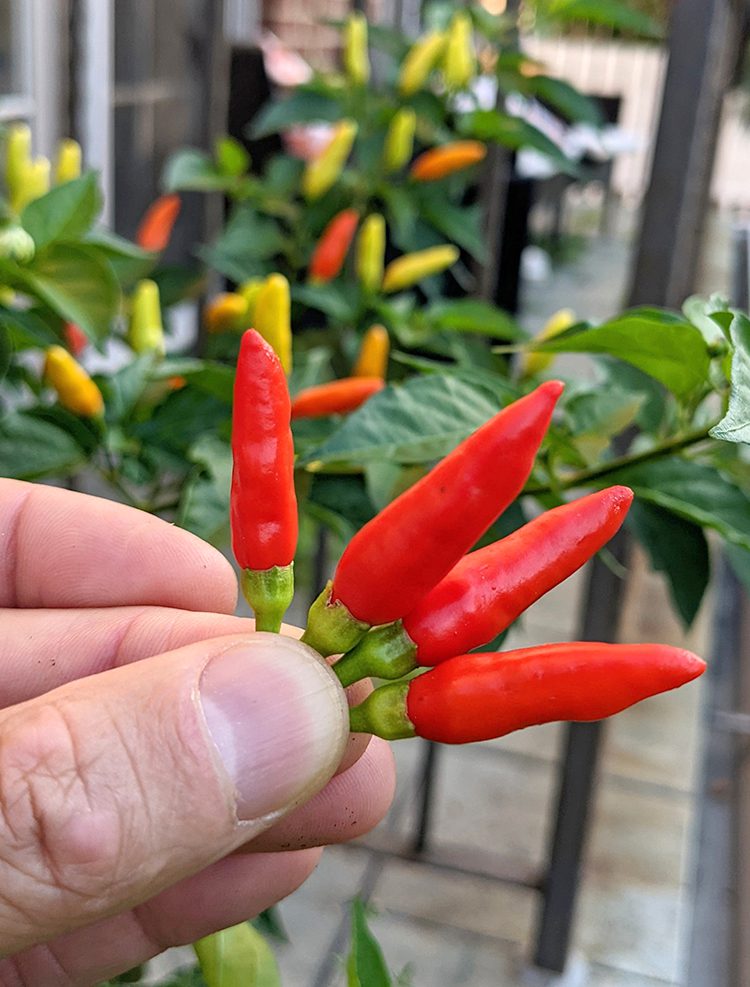
If you love spicy food, Tabasco peppers are my most lightly recommended crop for container gardening in small spaces.
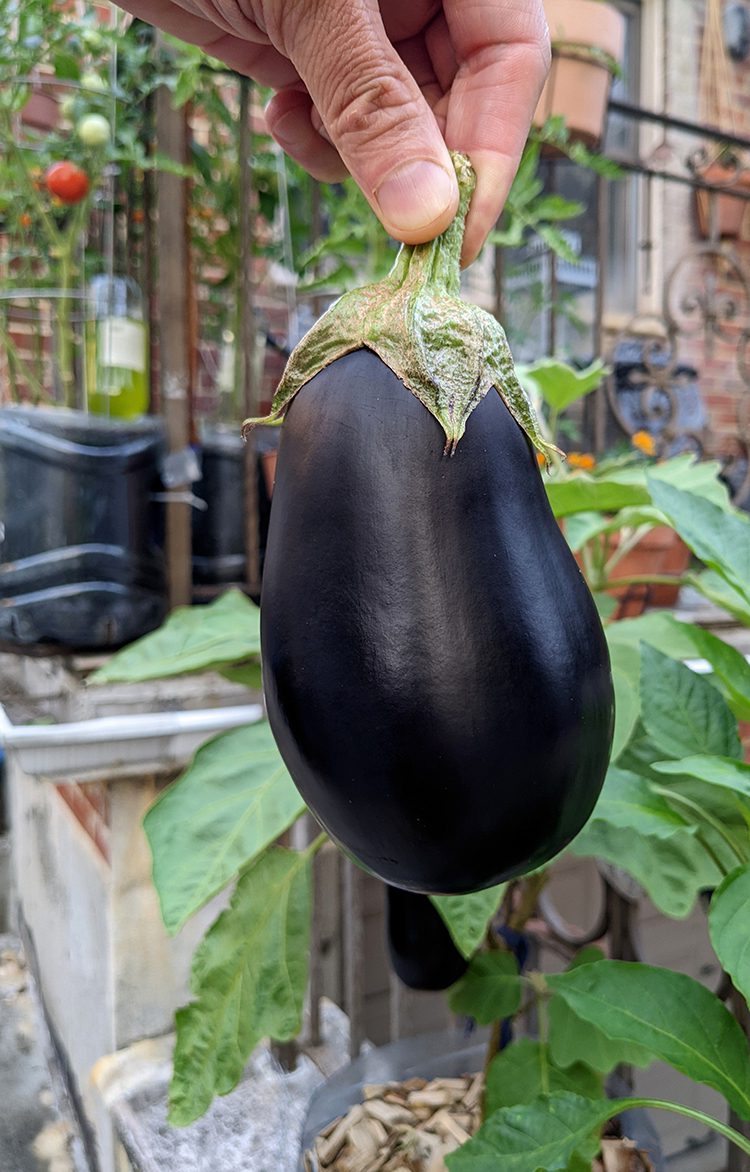
First time growing large eggplants in 5-gallon containers, and this is the largest it got.
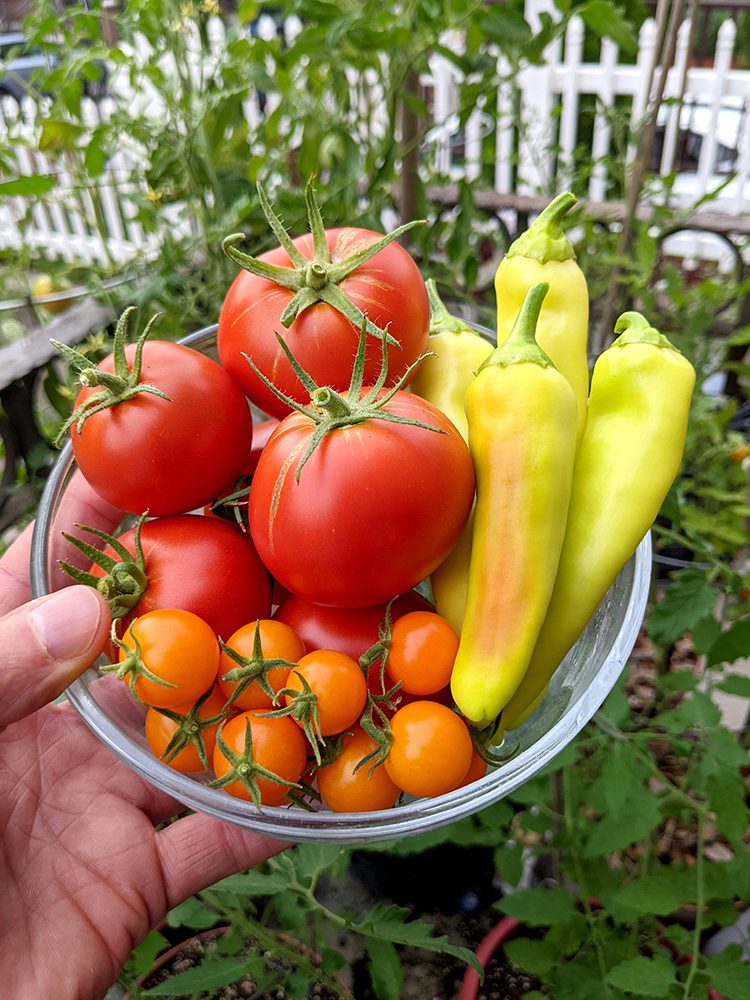
Heirloom tomatoes and banana peppers were dwarf-sized in 5-gallon containers, while cherry tomatoes are consistently the same size no matter what size container they are grown in.
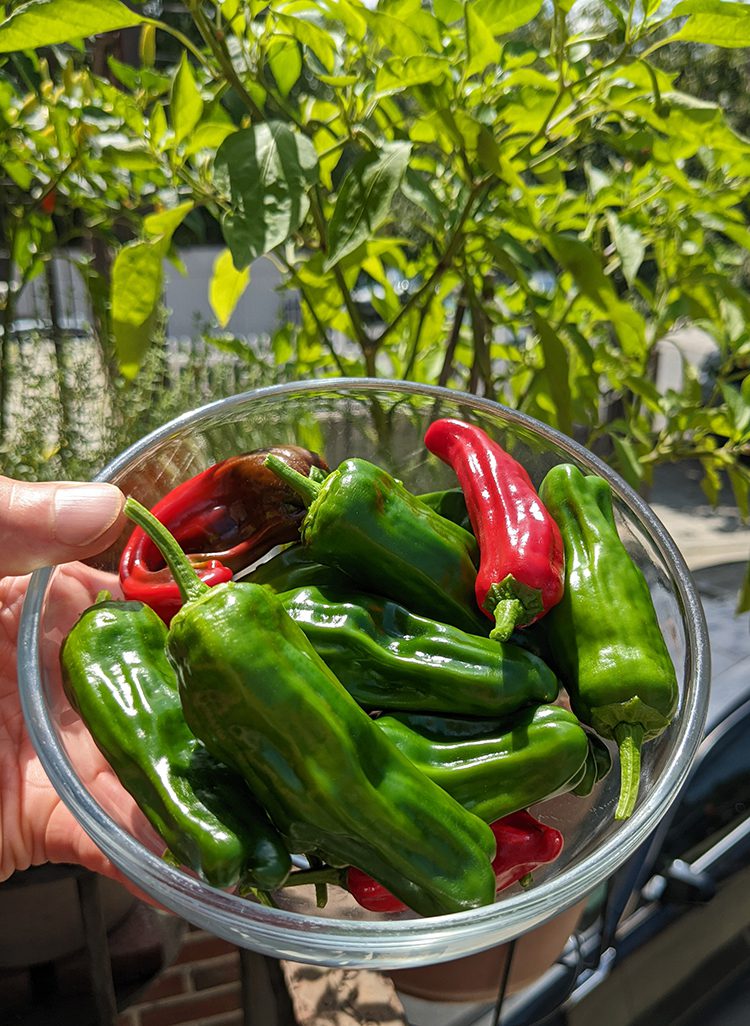
Shishito peppers have grow very successfully in 3-gallon containers … my second year doing so.
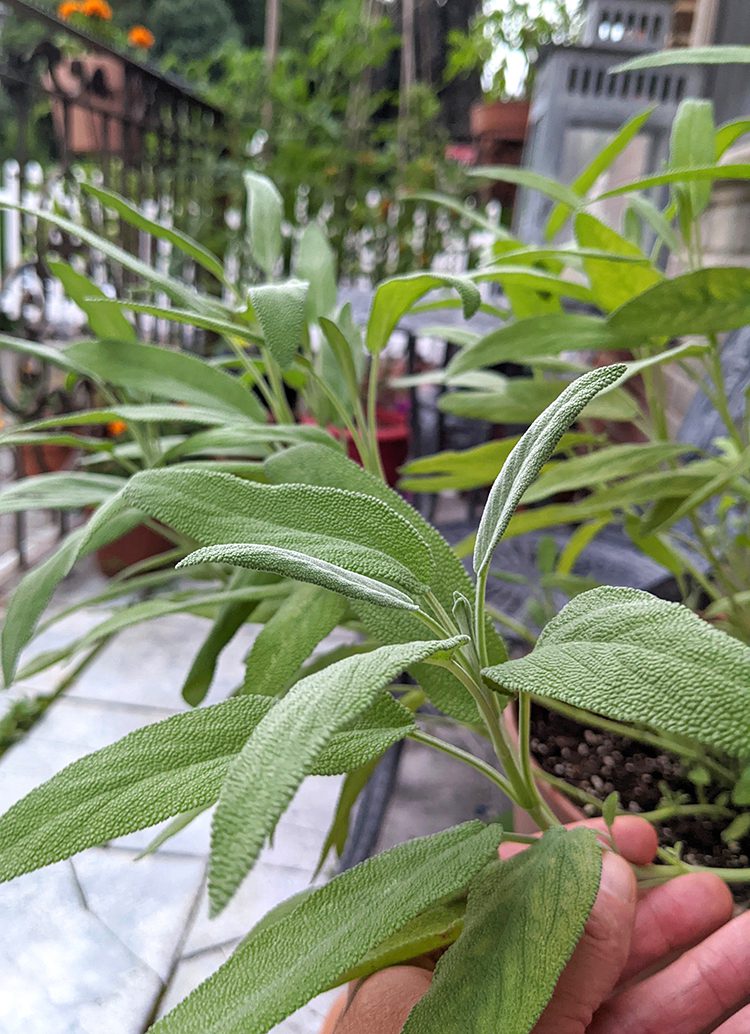
Sage thrived in a 3-gallon container with only 4-5 hours of sunlight per day. These sage branches were once cut down (almost completely) and it grew back to this length within 3 weeks!
Spring 2022
endive, spring mix lettuce
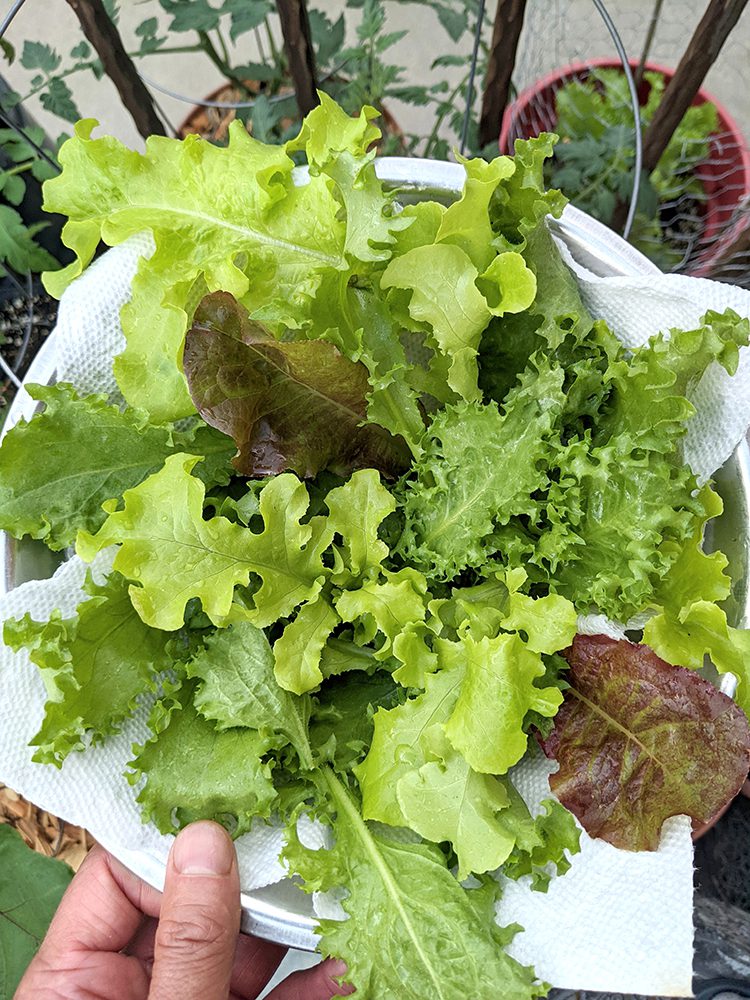
With so many salads constantly being made I figured this spring was time to grow some lettuce. I was always told lettuce thrives in cooler temperatures, and its completely true! The one obstacle was dealing with squirrels, for which I figured out a great solution. Building a squirrel barrier our of chicken wire fencing was super successful.
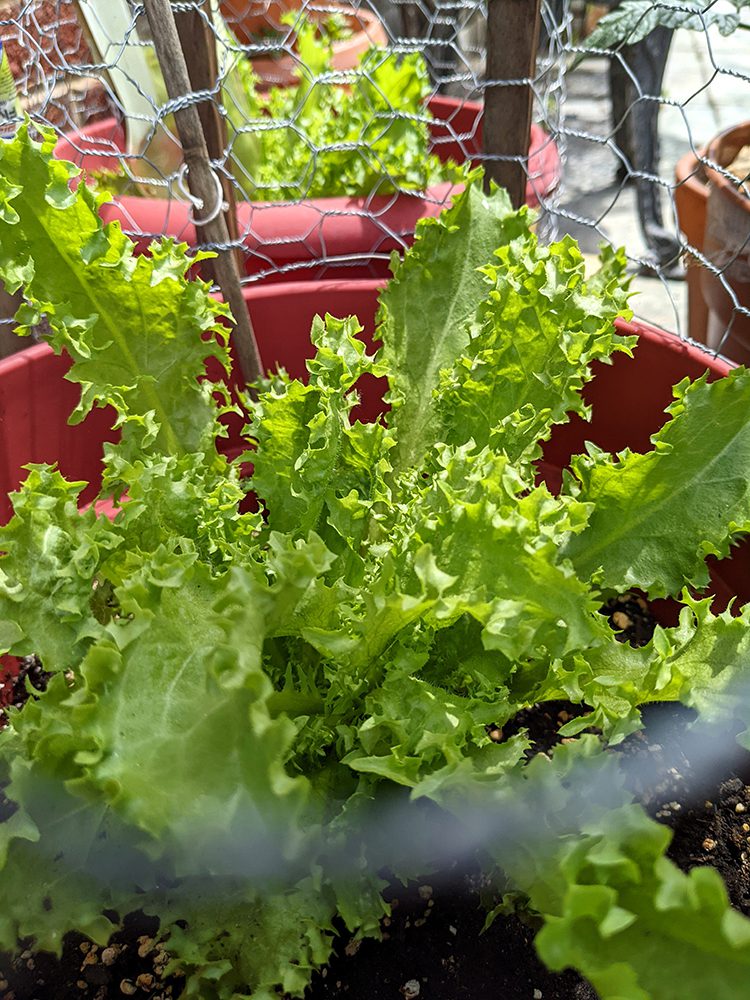
Building a squirrel barrier with chicken wire is a bit tedious, but it pays off.
what I learned
- Lettuce thrives in cooler temperatures, which contributes to a better flavor
- Lettuce has shallow roots, so is really economical in terms of the amount of soil you have to buy. Only 6 inches is needed and does find in clay pots.
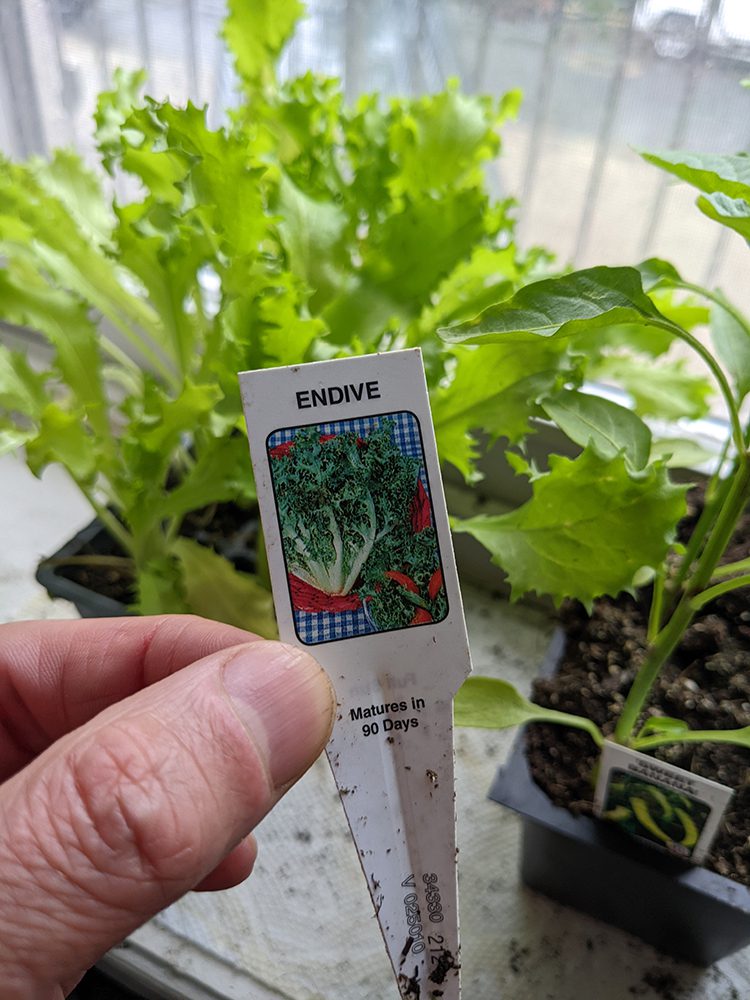
Endive lettuce has a slightly bitter taste and grows to a magnificent crown when it matures.
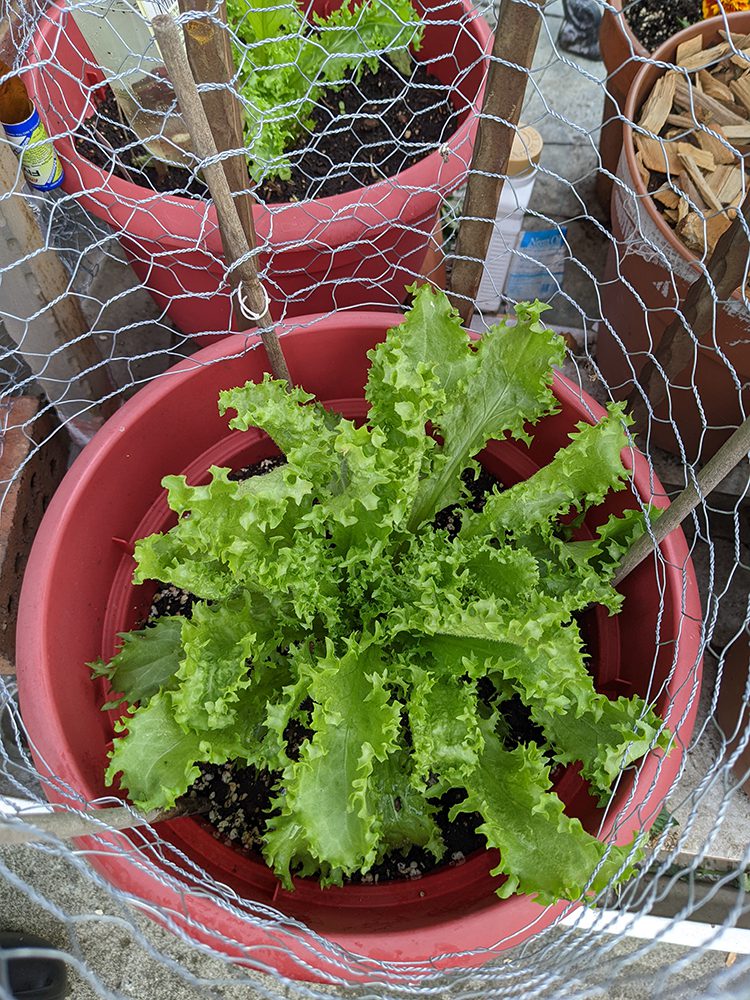
It took 3 to 4 weeks after planting seedlings to get my first endive harvest.
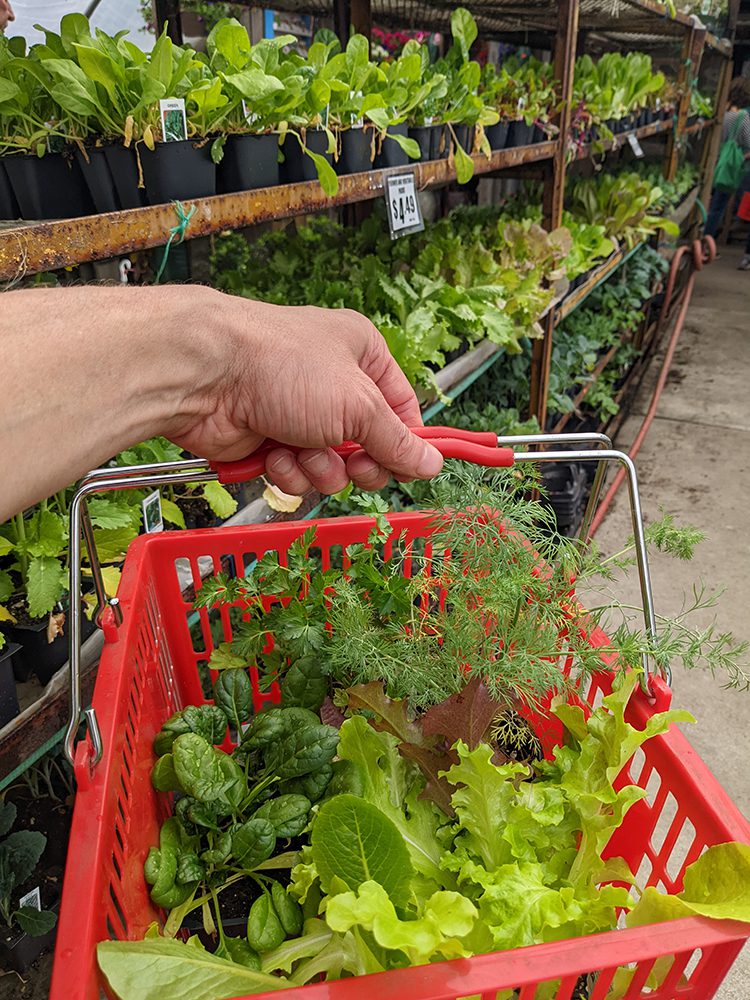
A trip to Verni’s Garden Center is one of my favorite weekend excursions to shop for seedlings. The quality is a little better than Home Depot.
Summer 2021
Cayenne peppers, banana peppers, thyme, sage, bell peppers, Ichiban eggplants, Sungold cherry tomatoes, Husky red cherry tomatoes
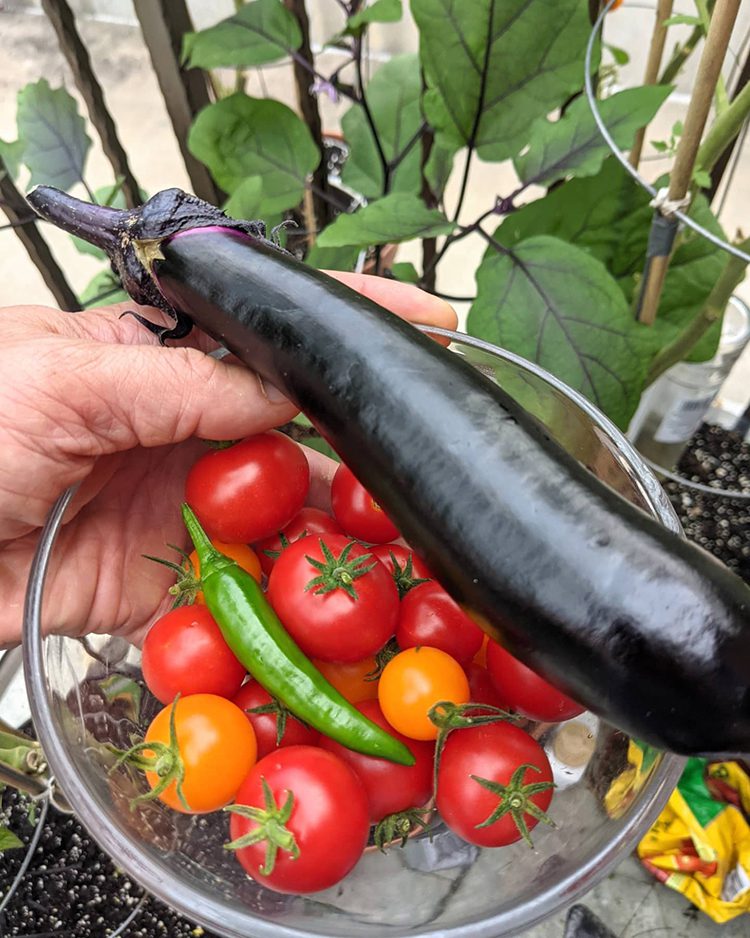
Patience and optimism was the name of the game in 2021. It was a rough start as some seedlings purchased from Home Depot had been infested with pests. Therefore, I had to uproot the problem plants and start over … twice in some cases.
what I learned
- Cayenne peppers don’t fully mature in 3 gallon containers. My final yields were jam packed with seeds.
- Sungold cherry tomatoes were still proven to be my most favorite variety for their sweetness. Grew some husky reds in 2021 and wasn’t very impressed.
- Bell peppers do better in partial shade and do not like hot temperatures. All the pepper flowers fell off during a heat wave.
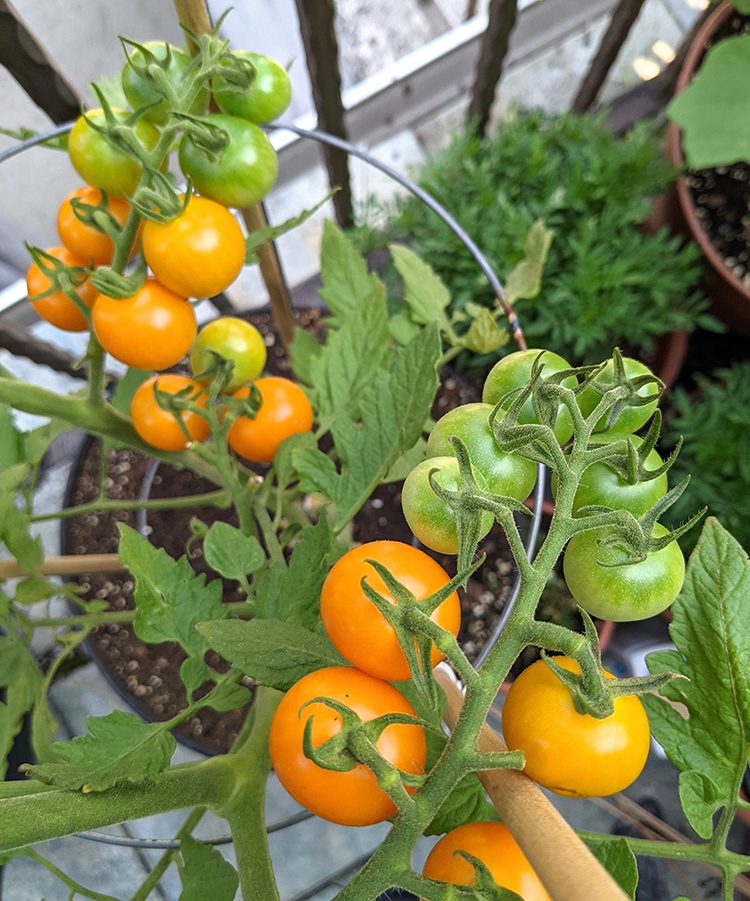
I highly recommend growing Sungold cherry tomatoes due to their extreme sweetness.
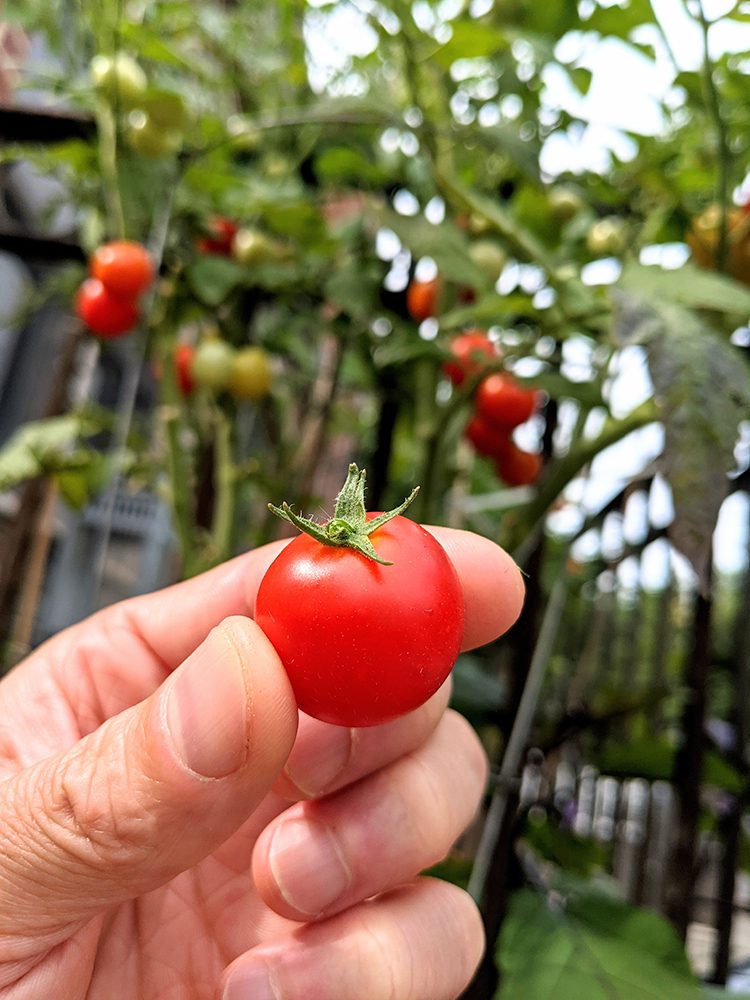
Husky red cherry tomatoes have a firmer flesh, but they are not very sweet.
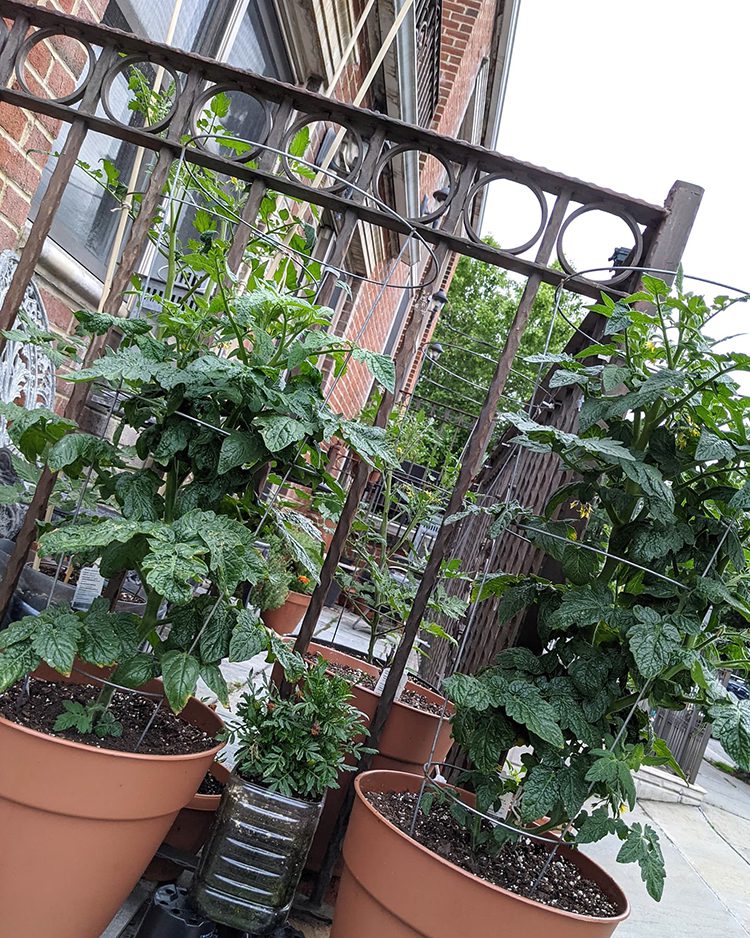
A huge benefit of container gardening is that you can place your plants to areas that receive the most sunlight. Moving just a foot or so can make all the difference. These tomatoes were moved outside the railing edge to capture an extra hour of sunlight in the mornings.
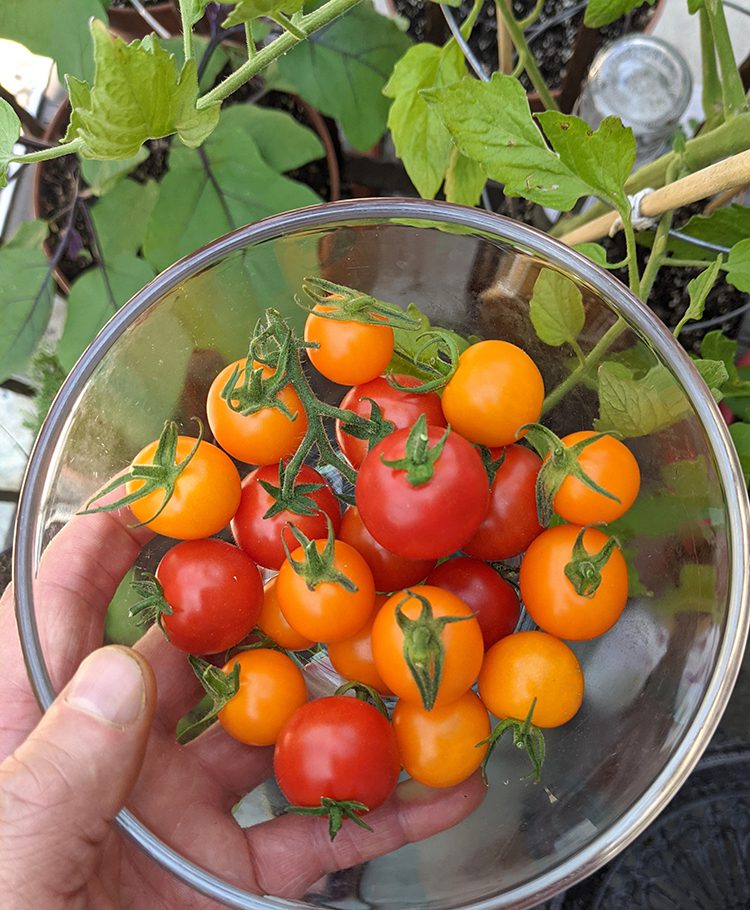
Cherry tomatoes are my most recommended crop for container gardening. Sungolds are extremely sweet, while these Husky Reds not so much.
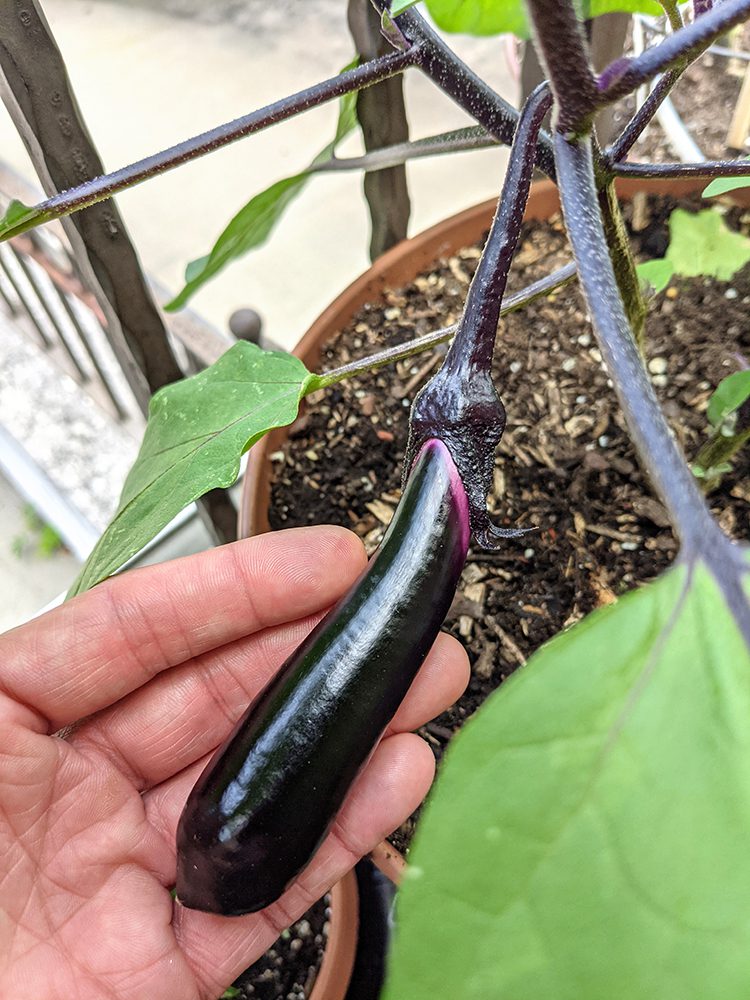
It took only 3 weeks to arrive at this 5-inch eggplant after cutting the seedling down to almost nothing (see below). It was stressed out from pests, but it eventually overcame!
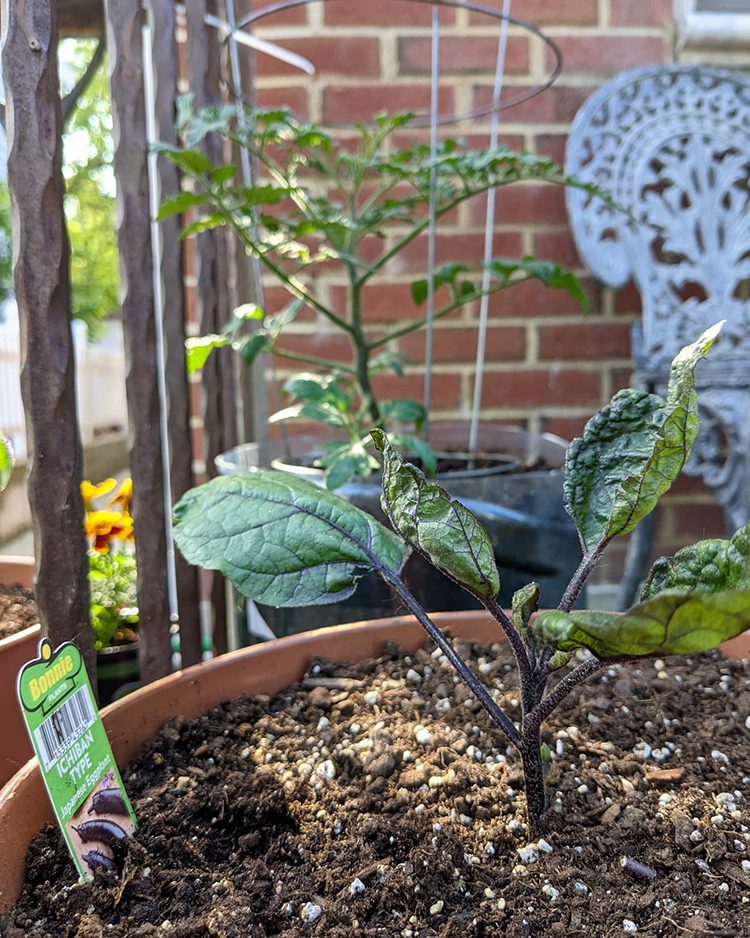
Ichiban Japanese Eggplants are the ultimate optimists. This had a slow rough start but it ended up thriving, giving me at least a dozen eggplants.
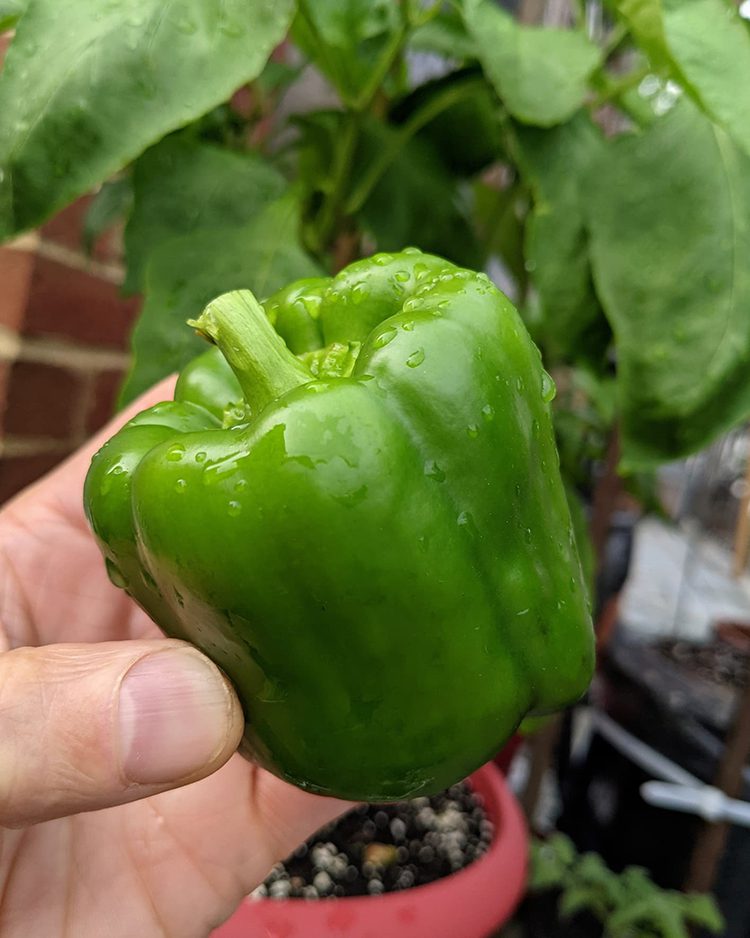
Bell peppers prefer partial shade and cooler temperatures. Lots of flower buds drop off pepper plants naturally, but higher temperatures (above 90-ish) will cause flower drop even more so.
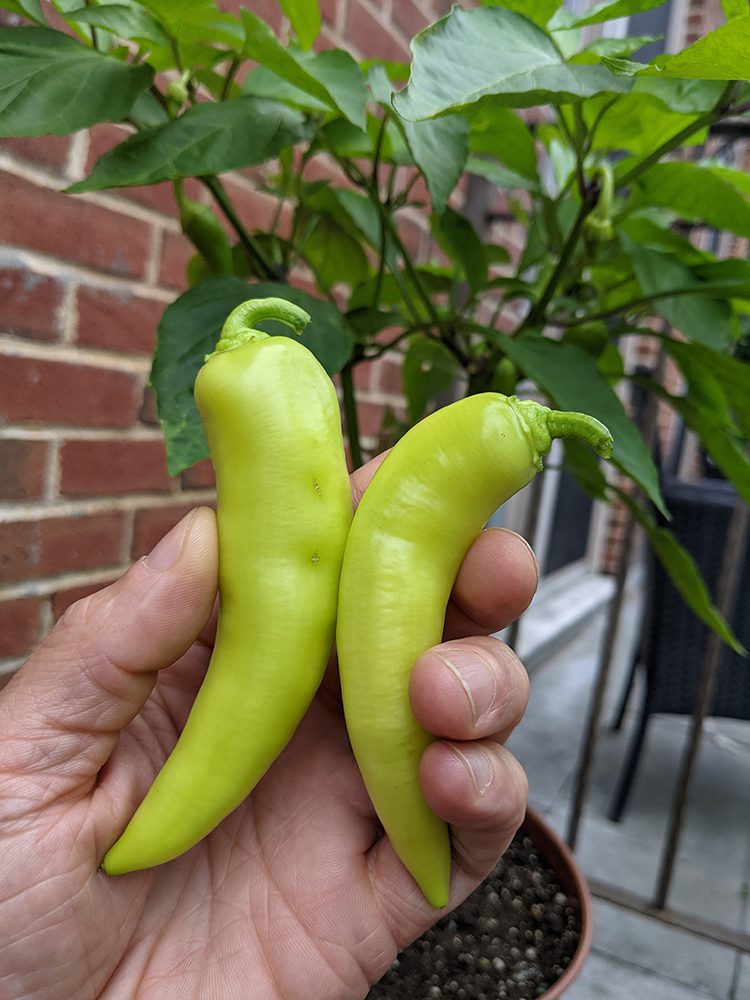
Banana peppers grown in 3-gallon containers will only grow to about 4 or 5 inches, so don’t waste valuable time waiting for them to get bigger. Cut them loose to pave the way for more to grow!
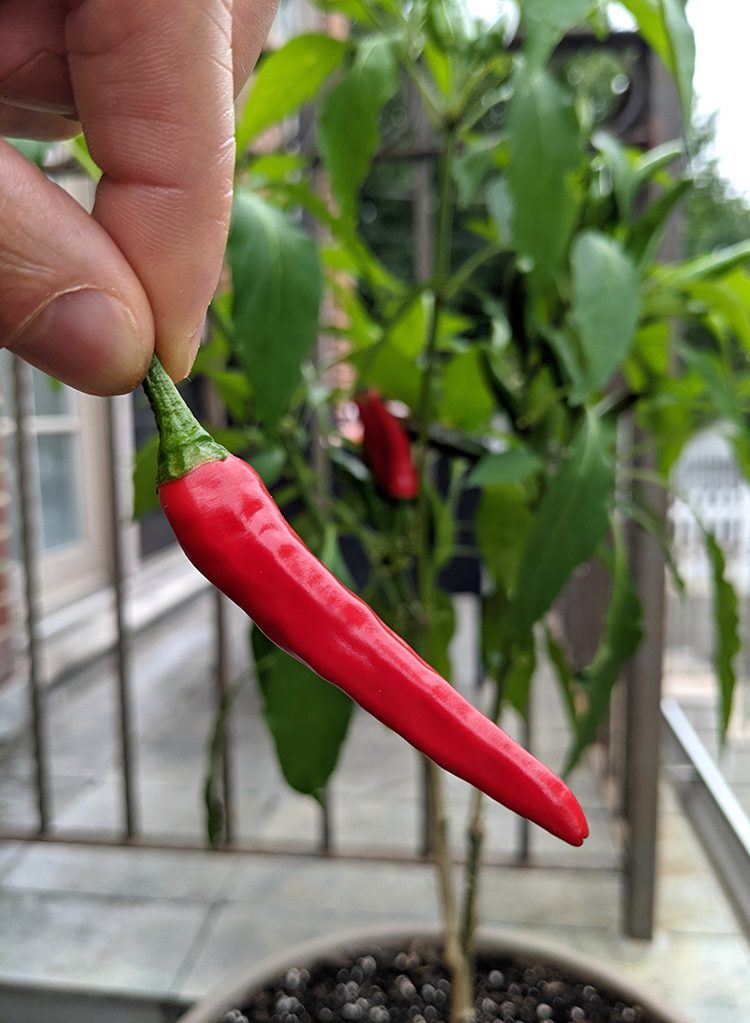
Cayenne peppers don’t fully mature in 3 gallon containers. These final yields were jam packed with too many seeds.
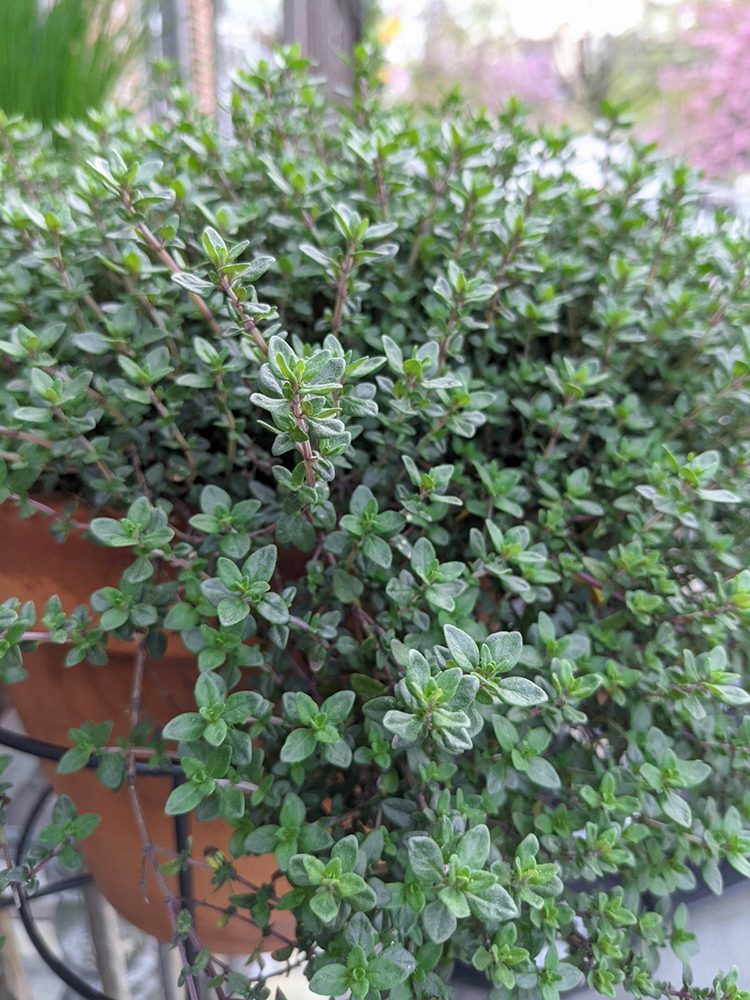
Thyme is one of the easiest herbs to grow and you can do so in smaller containers. It does need lots of sun however, or else the leaves turn white.
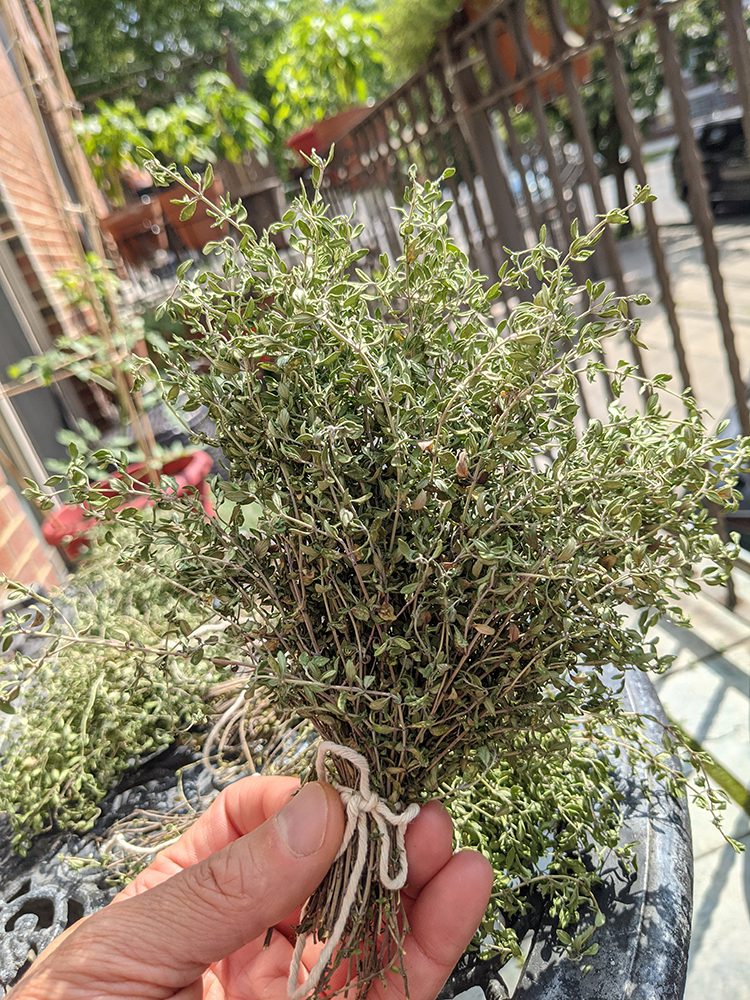
Thyme is a hearty herb whose flavor intensifies from being dried. Harvest and tie it in bundles, then store it dried in a glass jars for future use in recipes.
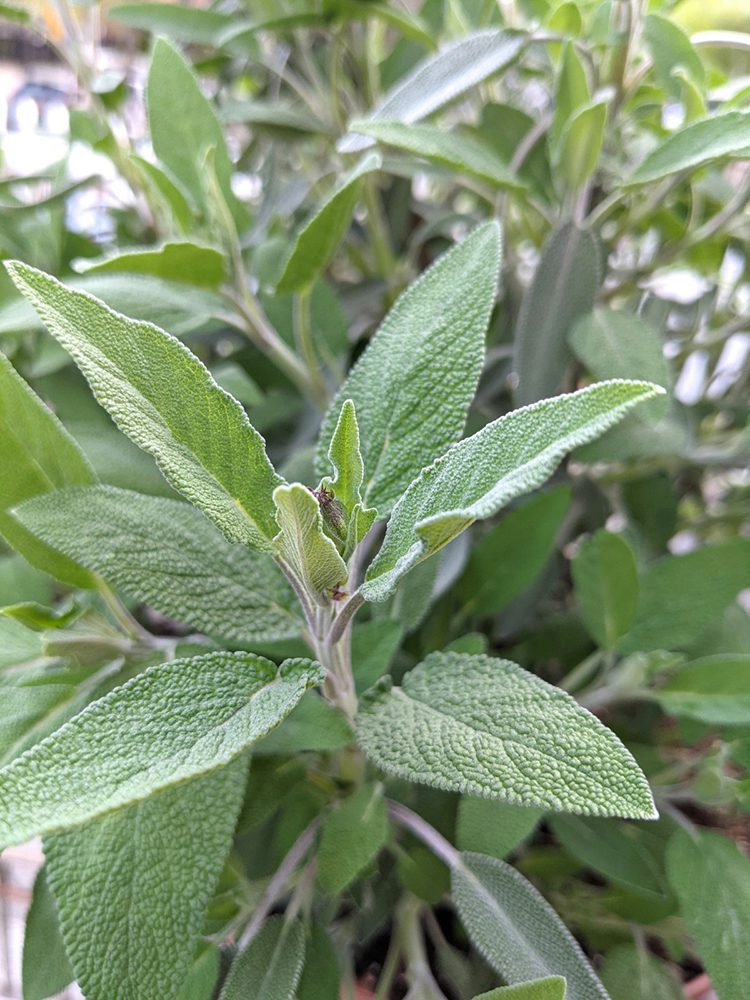
Sage grows super fast and it only received 4 hours of sunlight. You have to harvest it often or just trim off any dying leaves so it can regrow new ones. You can also cut off entire branches and dry them out.
Summer 2020
heirloom cherry tomatoes, sage
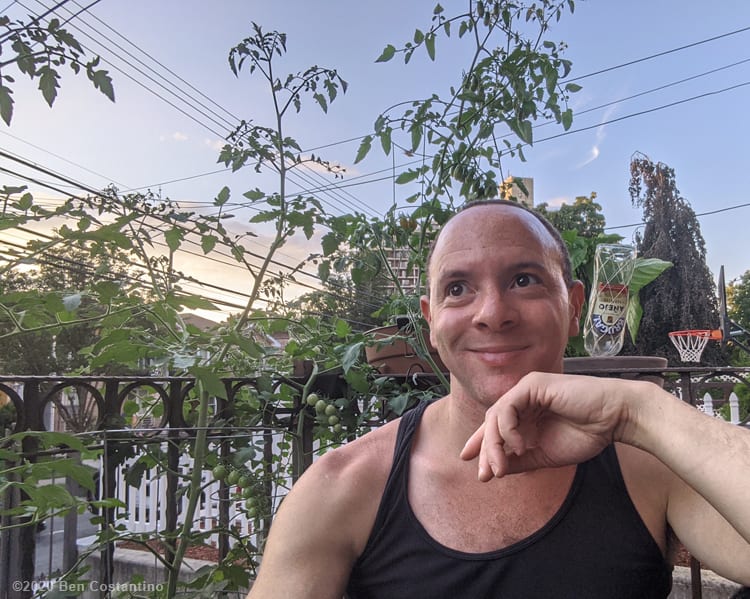
Summer 2020 was challenging as NYC was shut down beginning in March. Not being able to go to Home Depot to buy seedlings meant that I had to get creative. I ended up extracting some seeds from store bought tomatoes and planting them indoors. Yup, it was a good indoor pandemic activity. Someone told me that store bought tomatoes would not work out. I was told they wouldn’t produce fruits and they were completely wrong. I chose to extract from a cute brand of heirloom cherry tomatoes, can’t remember the name.
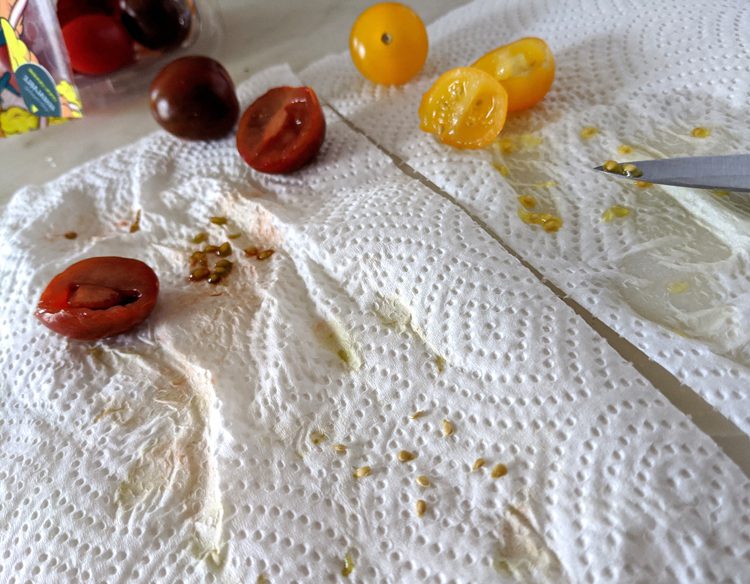
Extracting seeds from a brand of heirloom cherry tomatoes. Dried them on paper towels.
I also managed to find a sage seedling somewhere, so it got me started with growing herbs. Sage frequently looks not-so-good in grocery stores and it grows super fast, so it’s perfect for container gardening at home.
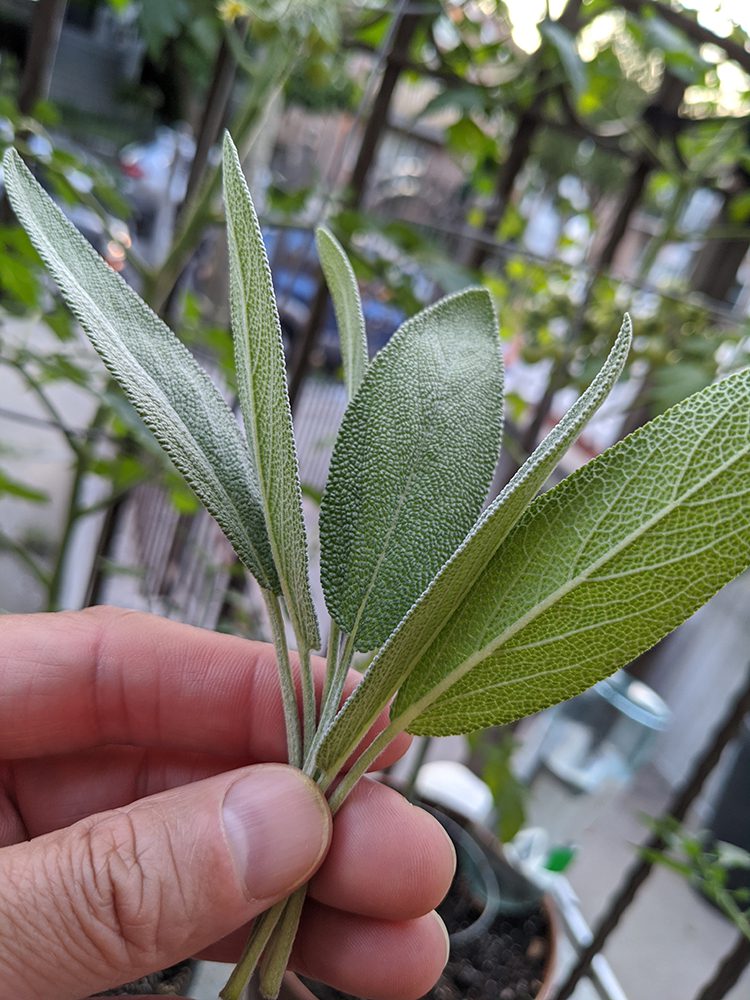
Sage grows quite abundantly in 3-gallon containers with 4 hours of direct sunlight per day.
what I learned
- Growing tomatoes from store-bough seeds DOES work but they do behave a little differently. It depends on the brand and how they are treated in production.
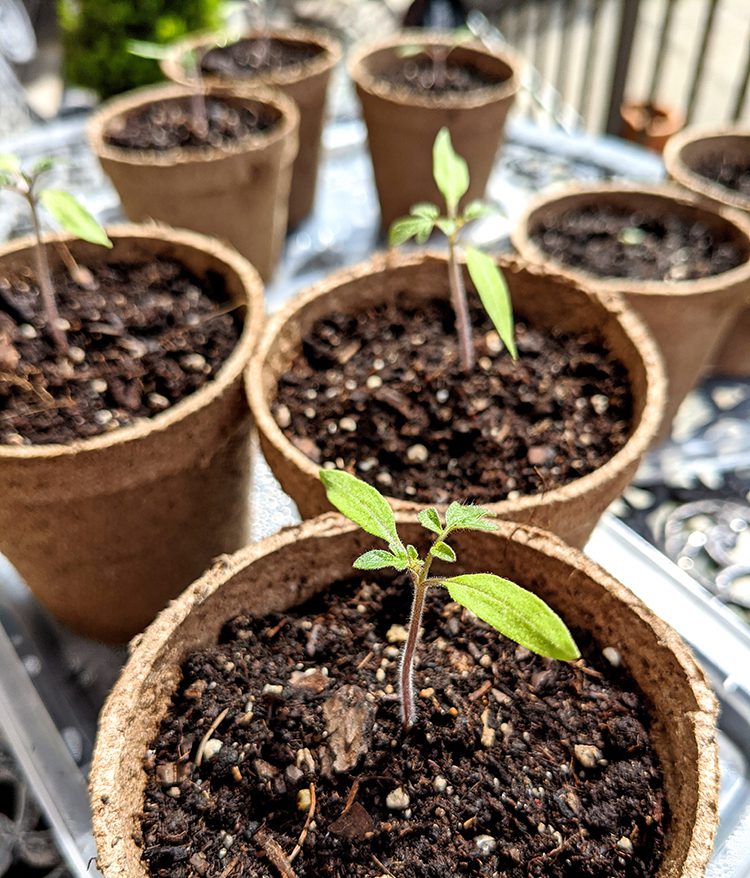
Grown from seeds, it took about 4 to 5 weeks for these 1 to 2-inch seedlings.
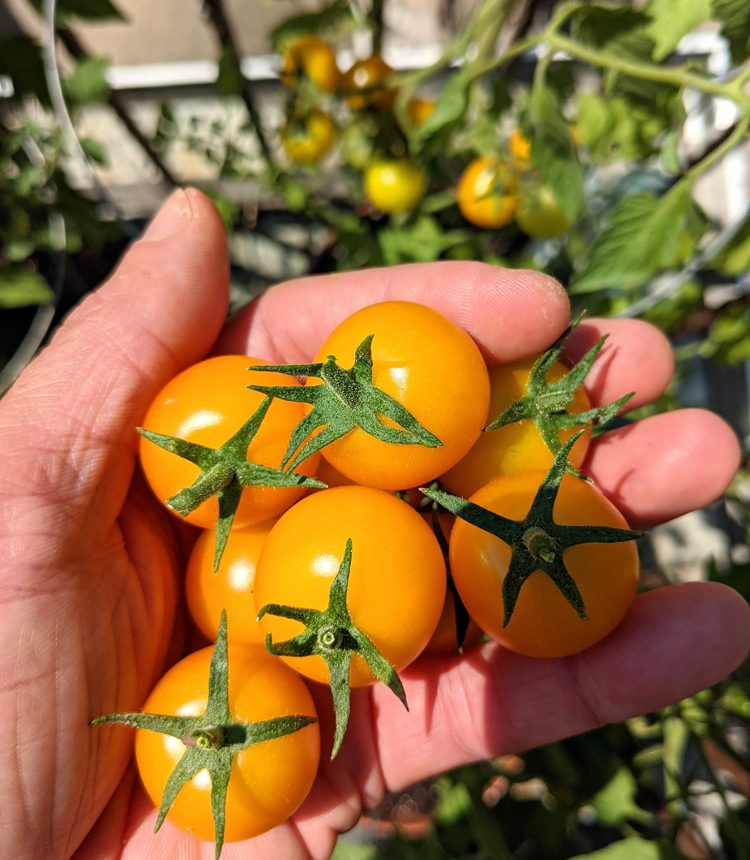
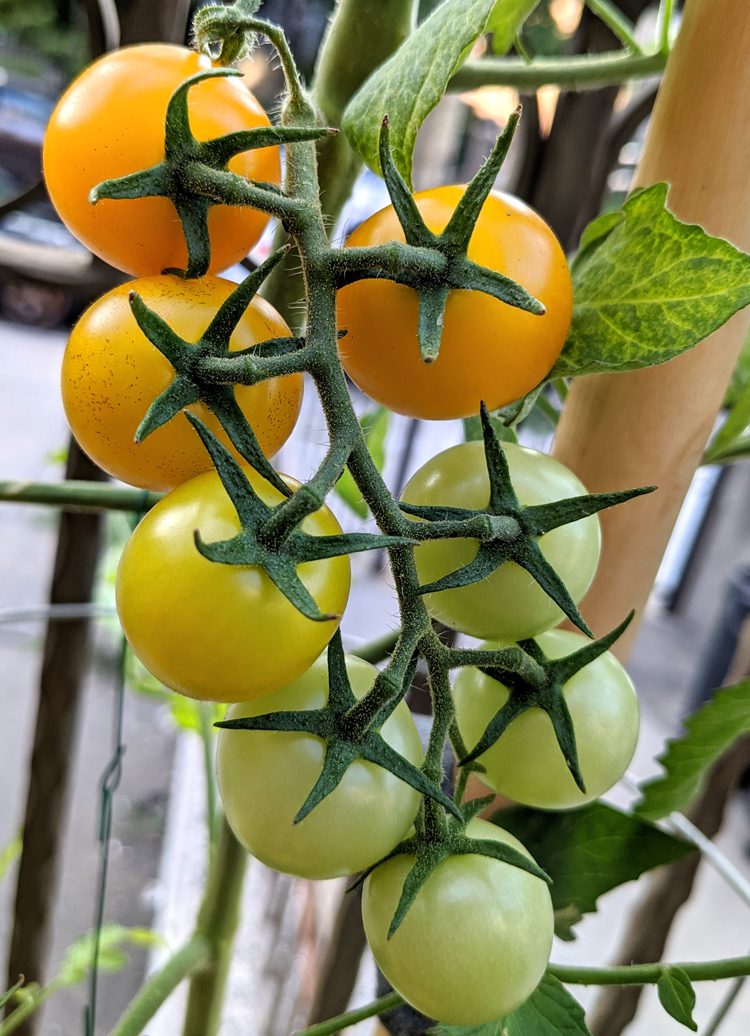
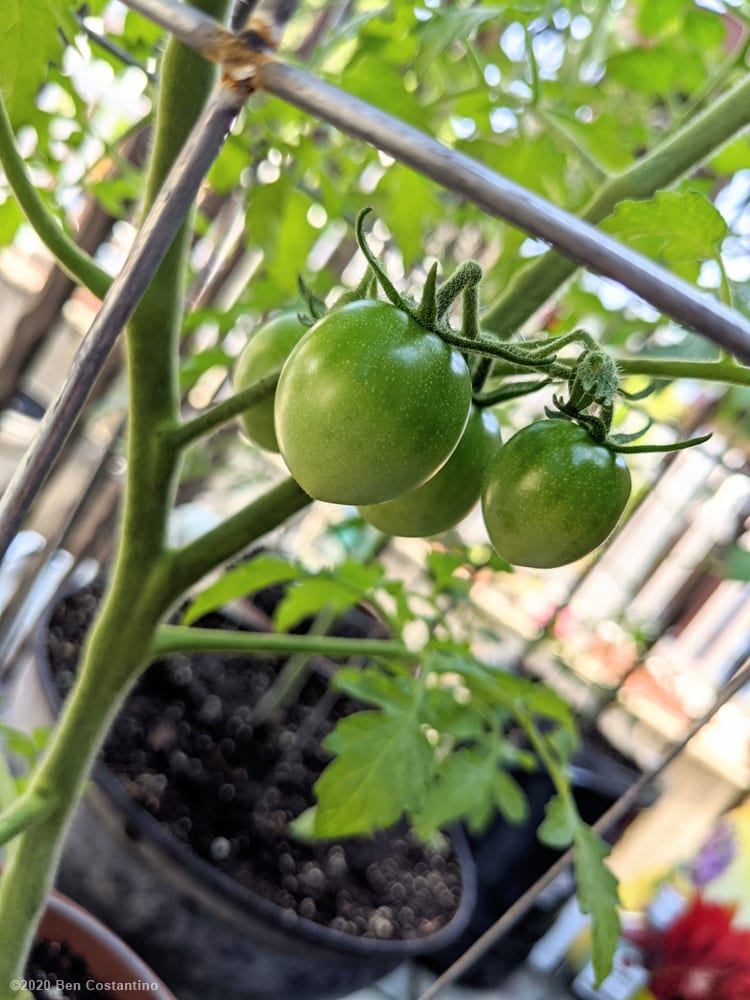
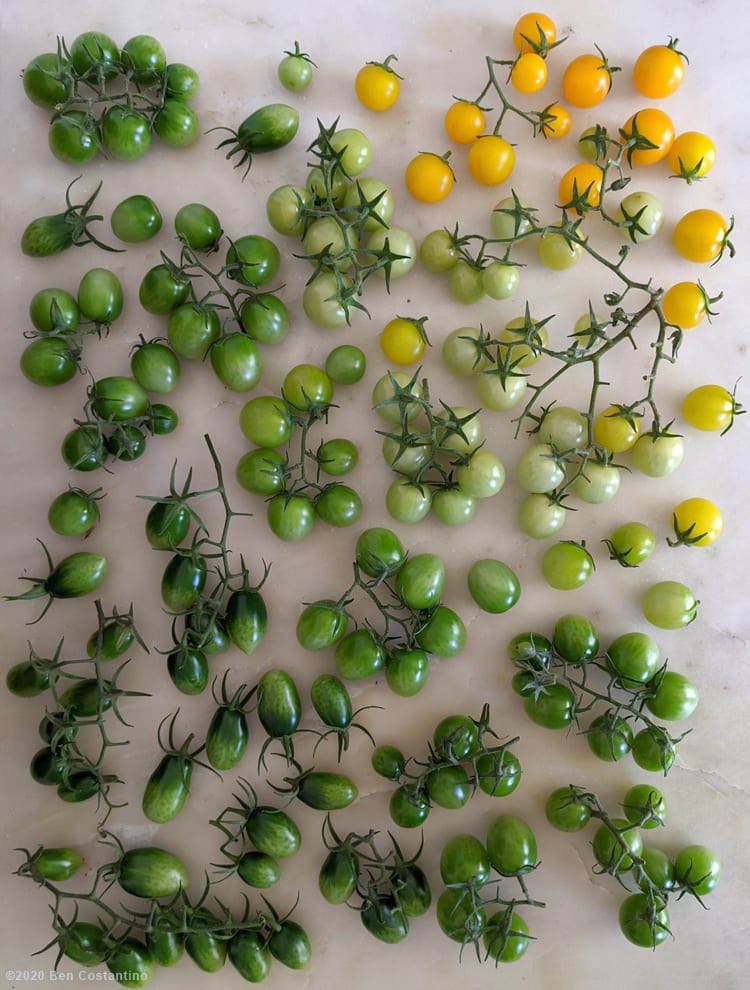
A weird thing that happened in the 2020 growing season was a ripening problem. Very few tomatoes ripened. I thought I was doing something wrong, but tomato growers I know from all parts of the country (as far as Seattle) had the same problem. So, decided it was time to make Fried Green Tomato Bites.
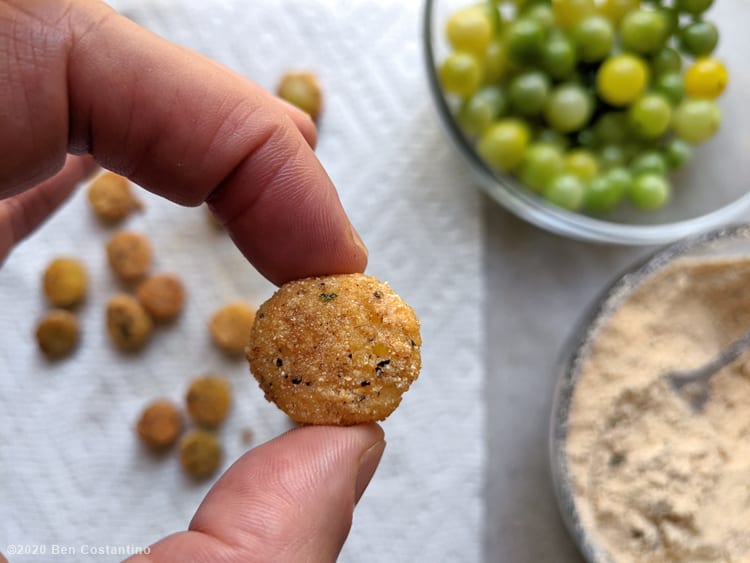
Made these Fried Green Tomato Bites with all the unripened tomatoes.
Summer 2019
Sungold cherry tomatoes, Tabasco peppers, Shishito peppers, kale, Thai basil
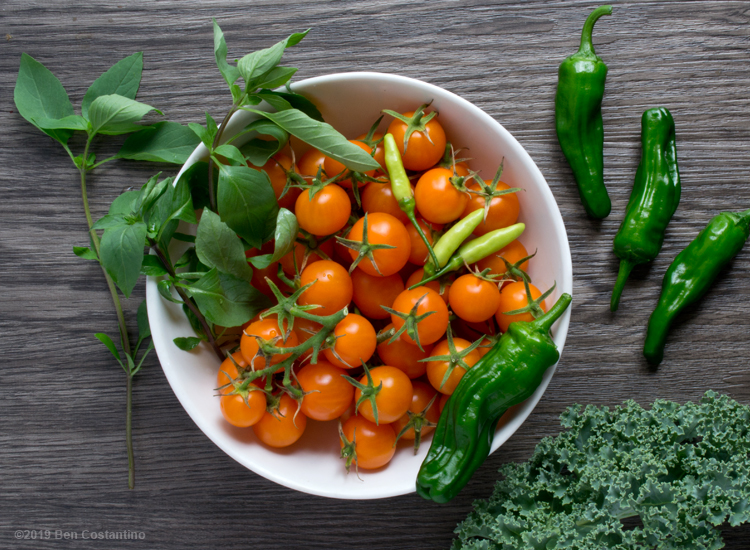
This was the year where I felt somewhat confident and inspired to expand my container gardening operation. I started getting a little bit of strategy and upgraded to 3-gallon containers for cherry tomatoes, Shishito peppers, and Tabasco peppers. The one gallon clay pots were used for herbs (thyme, chives, and sage) and kale.
what I learned
- Cherry tomatoes are the easiest thing to grow in container gardening. For ultimate sweetness, try Sungolds.
- “Yellow” cherry tomatoes are actually orange. Or perhaps the seedlings were labeled wrong at Home Depot … hmmmmm.
- Shishito peppers grow very easily in 3 gallon containers, even with only 4 hours of sunlight per day in milder temperatures.
- Tabasco peppers like higher temperatures and grow very abundantly in 3 gallon containers with 5 to 6 hours of sunlight per day.
- About pruning. Pruning is when you strategically cut certain growth to stimulate more growth in other areas. Consider the length of your growing season before you decide to prune any peppers. Peppers take a while to “get going” as seedlings, so you have to start planting early in the season to reap the benefits of pepper pruning. I didn’t prune my Tabascos or Shishitos at all in 2019 and got plenty of peppers to cook with.
- Kale is very susceptible to pests and you can grow small kale in 9 inch pots. Harvest it ASAP before the green mites get to them.
- Kale (and all leafy greens) don’t do well in hot weather. Grow kale in spring, fall, or even on the cusp of mild winter conditions.
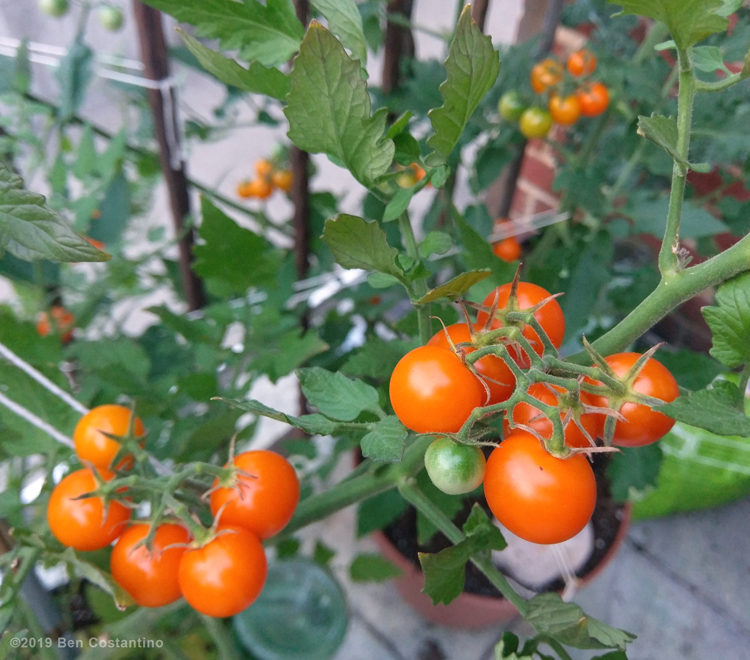
Growing yellow cherry tomatoes. Always wondering why they’re called “yellow” when they are clearly orange. Hmmmm.
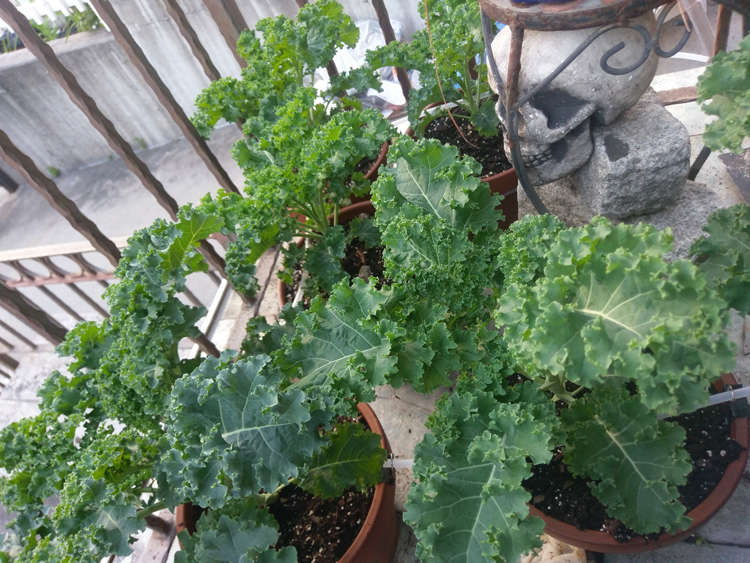
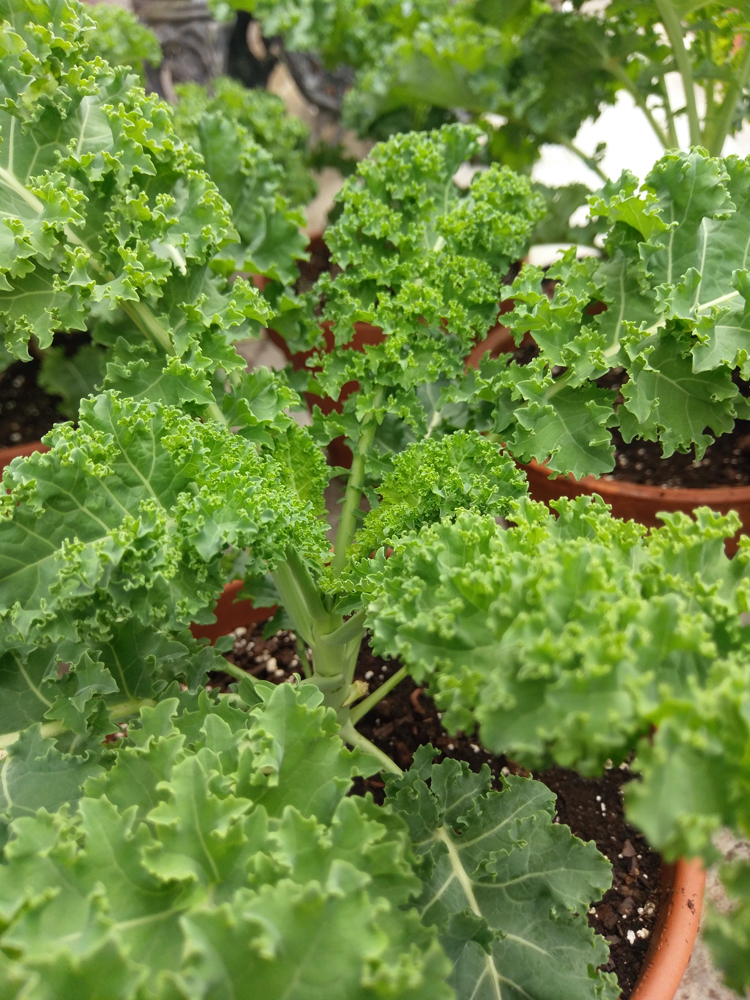
Growing kale (or anything) in small containers means a smaller crop. Big, leafy kale requires more space for the roots to grow. So so mini-kale was the result, which is perfectly fine. It was delicious.
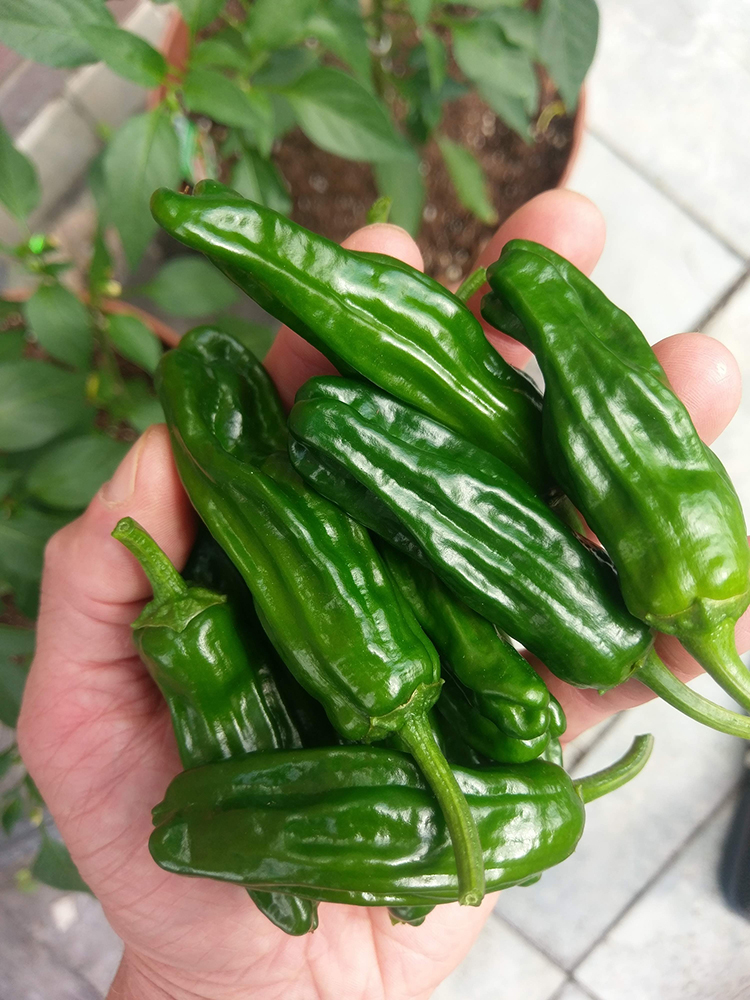
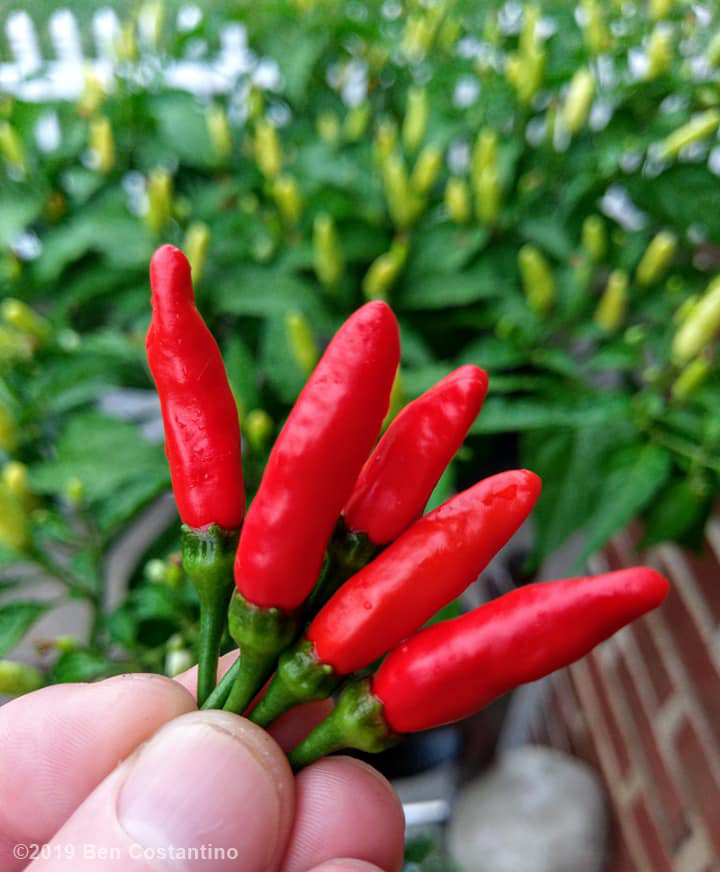
Tabasco pepper harvest. Used them to make Tabasco vinegar.
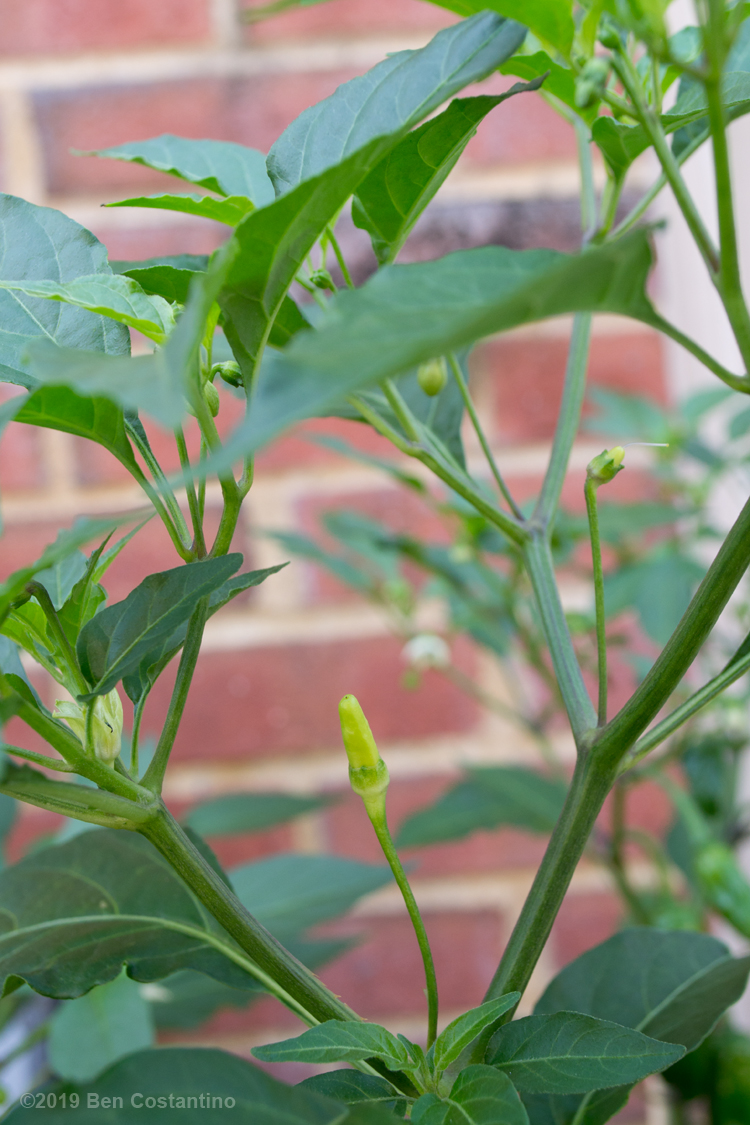
Even though it’s super exciting to see your first peppers at this infancy stage, you should really cut this first one as soon as you see it to promote more general growth to the plant. Otherwise it spends more of its energy on producing fruits.
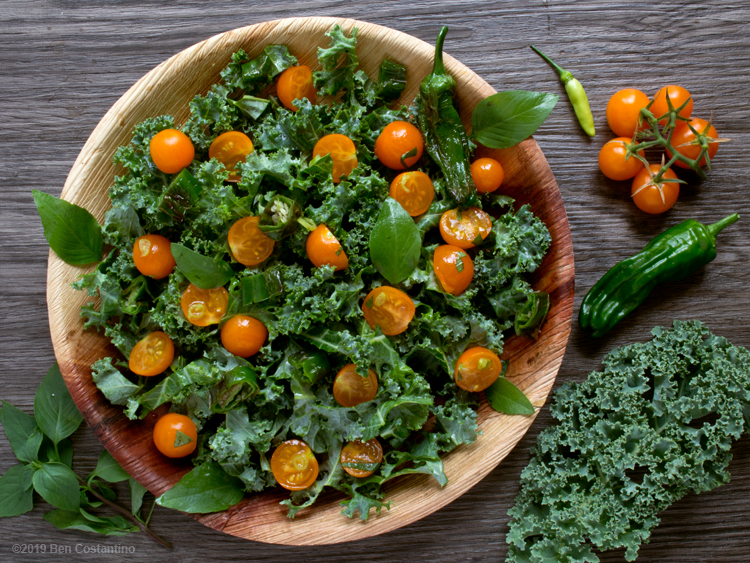
Garden salad with homegrown kale, yellow cherry tomatoes, Thai basil, Shishito peppers, and a vinaigrette laced with Tabasco peppers.
Summer 2018
collard greens, kale
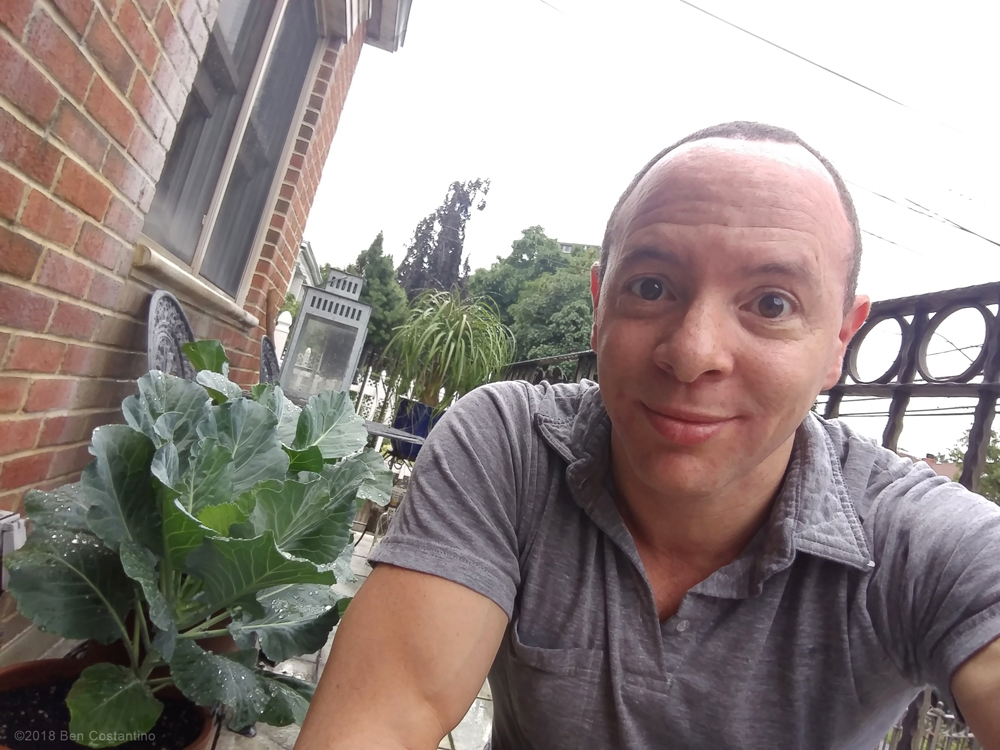
This was my rookie year. I literally just bought some seedlings, soil, and clay pots, then put everything out on the balcony without any real strategy to see what would happen.
what I learned
- Small pots are only good for flowers and herbs. As a rookie I tried growing collard greens in 9-inch clay pots and they really needed more room. The amount of herbs you need for cooking is sufficient for the herb yields of small pots. Also use small pots for marigolds (to attract beneficial insects which naturally kill pests).
- Clay pots are not good for hot weather. In the sun they get too hot, and dry out your soil faster. Then you end up having to water them too often, sometimes twice a day during a heatwave.
- Do proper research to know when to harvest your crops. Because your growing in containers, size may not be the only indication. I left many of my baby eggplants on the vine too long, so they were too seedy to enjoy eating.
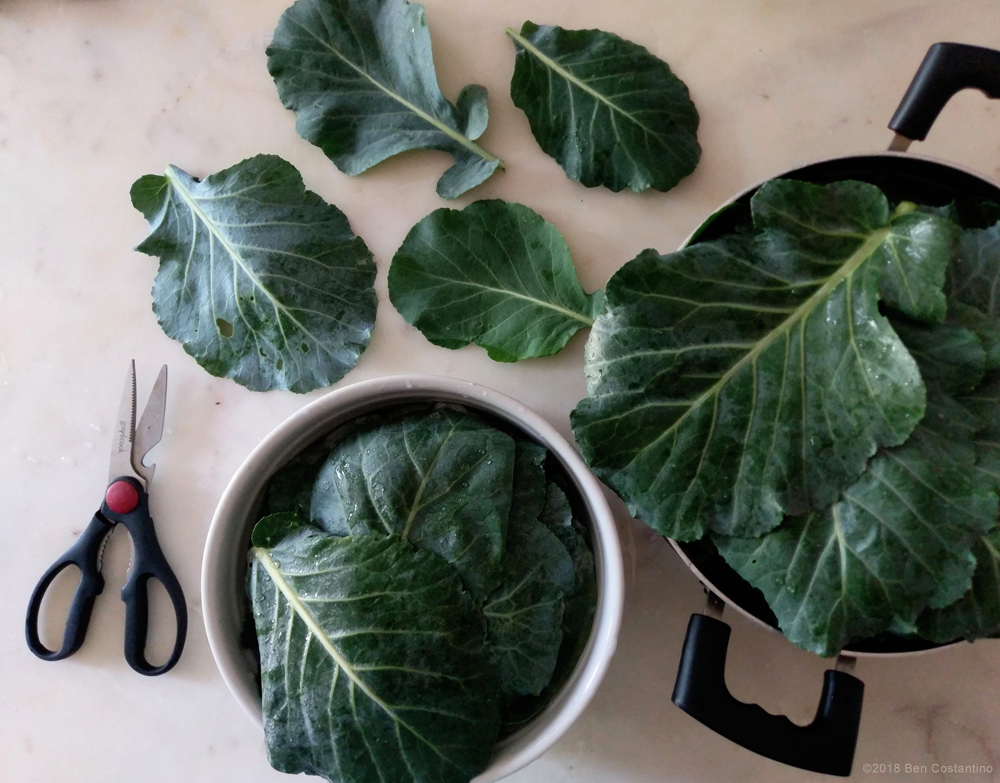
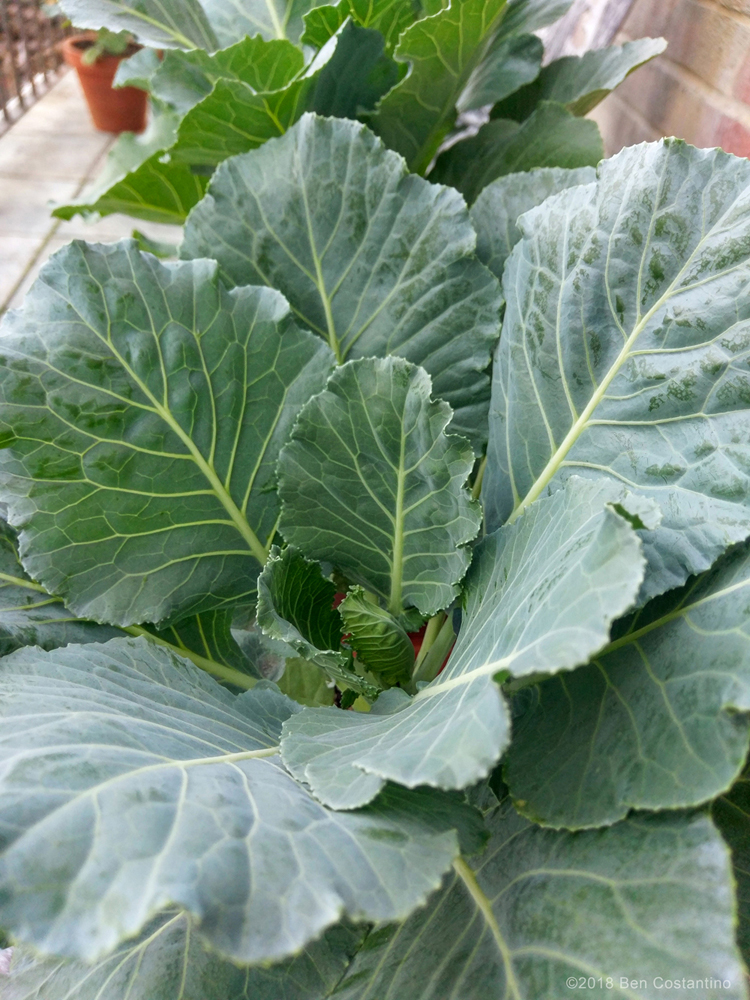
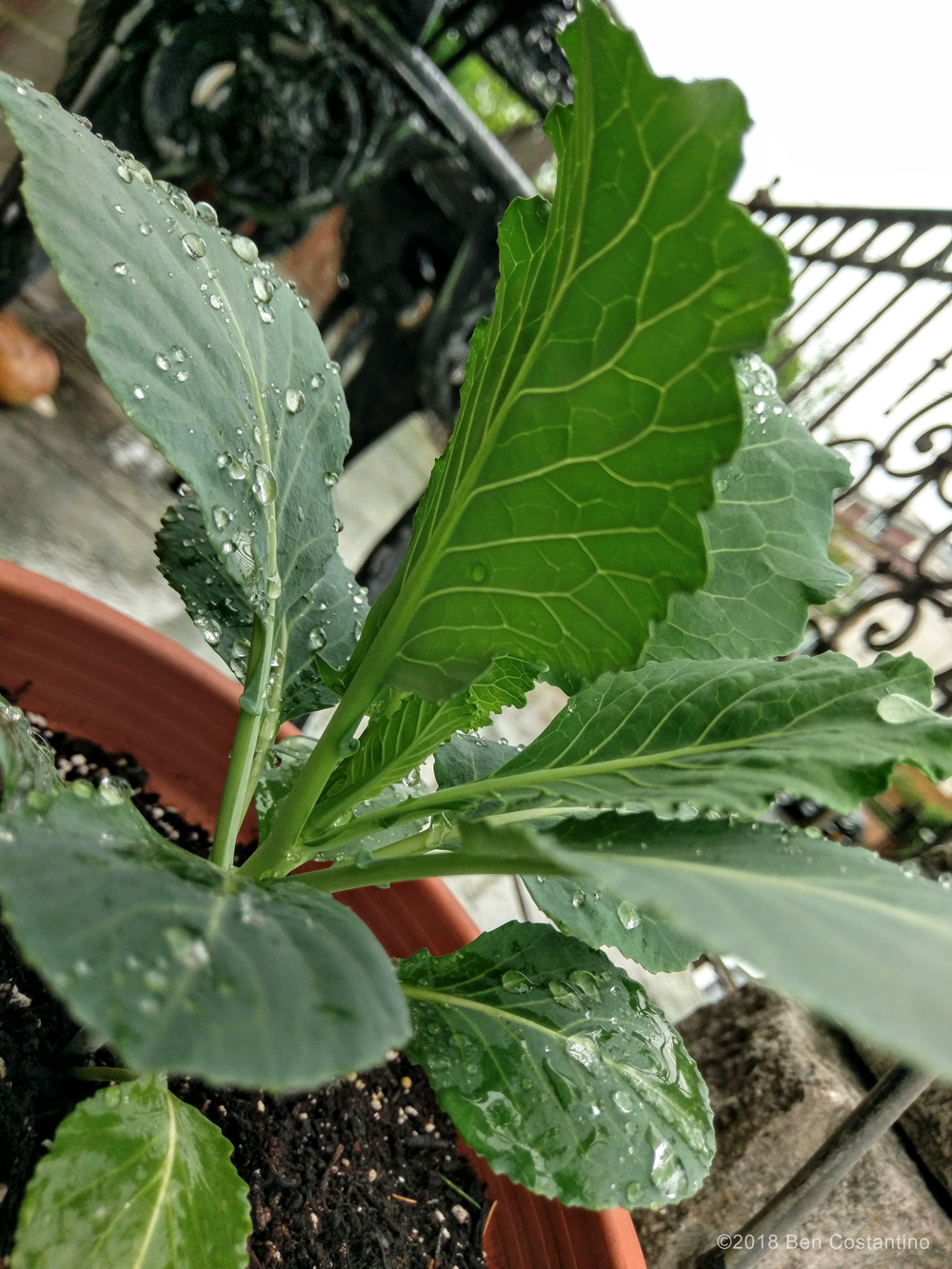
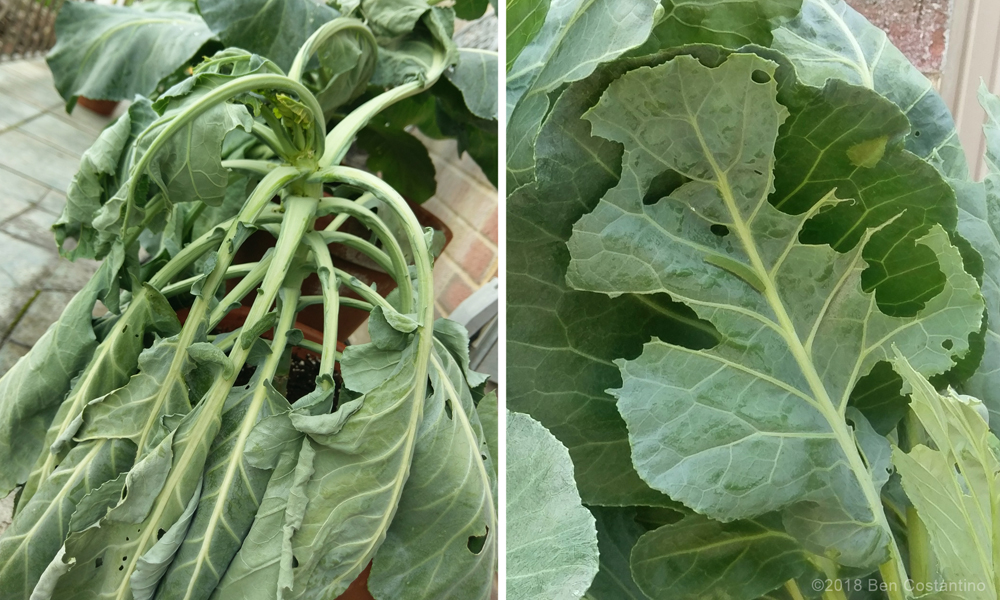
Trouble in paradise … (left) forgot a morning watering on a day when an extreme heatwave swept across New York City but they made a miraculous recovery after a healthy dose of water; (right) learning about pesticides – or lack thereof – the hard way.
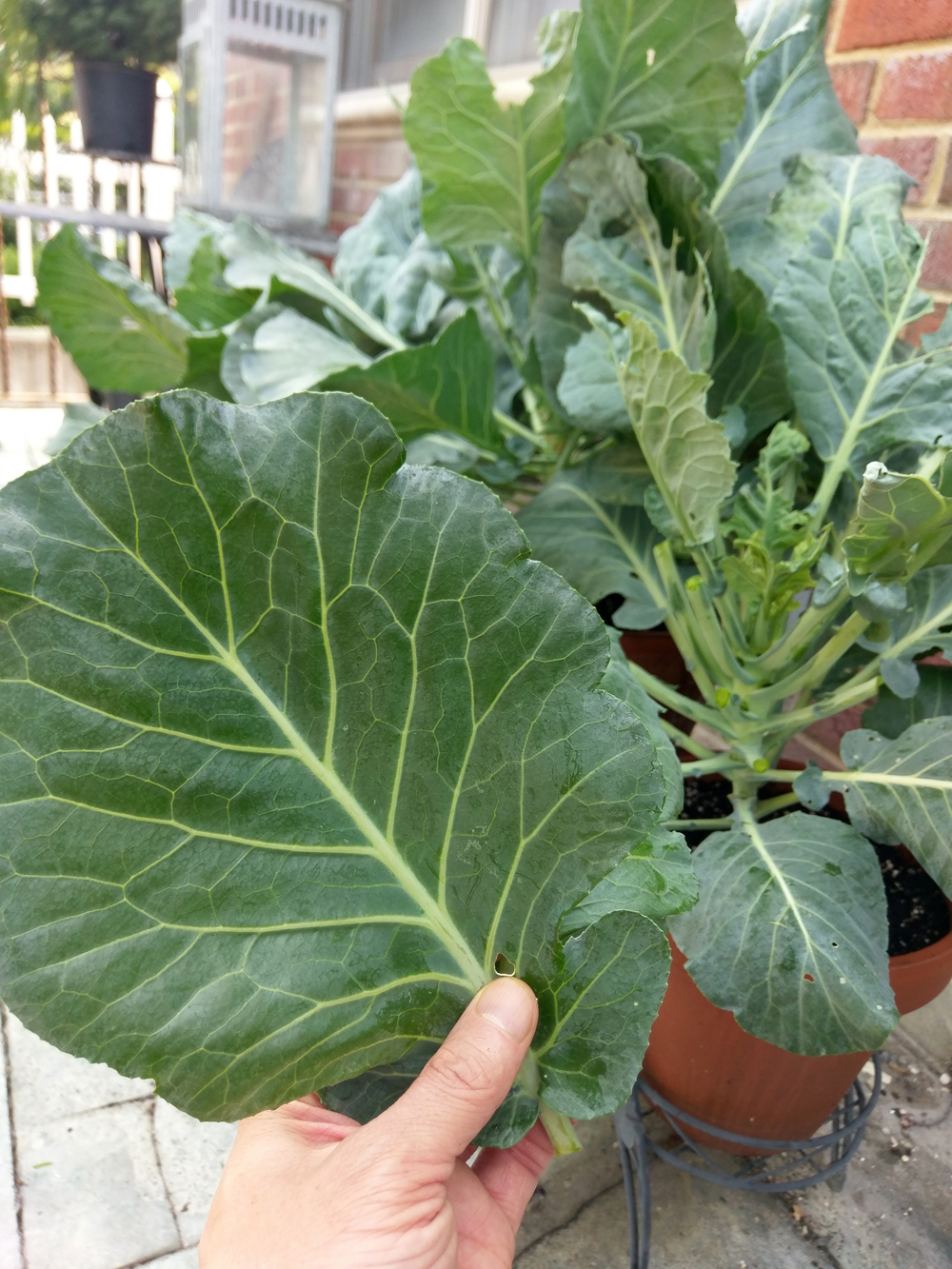
You can grow collard greens in small pots, but they won’t get super big. So harvest them rather quickly to reduce the amount of time pests can get to them.
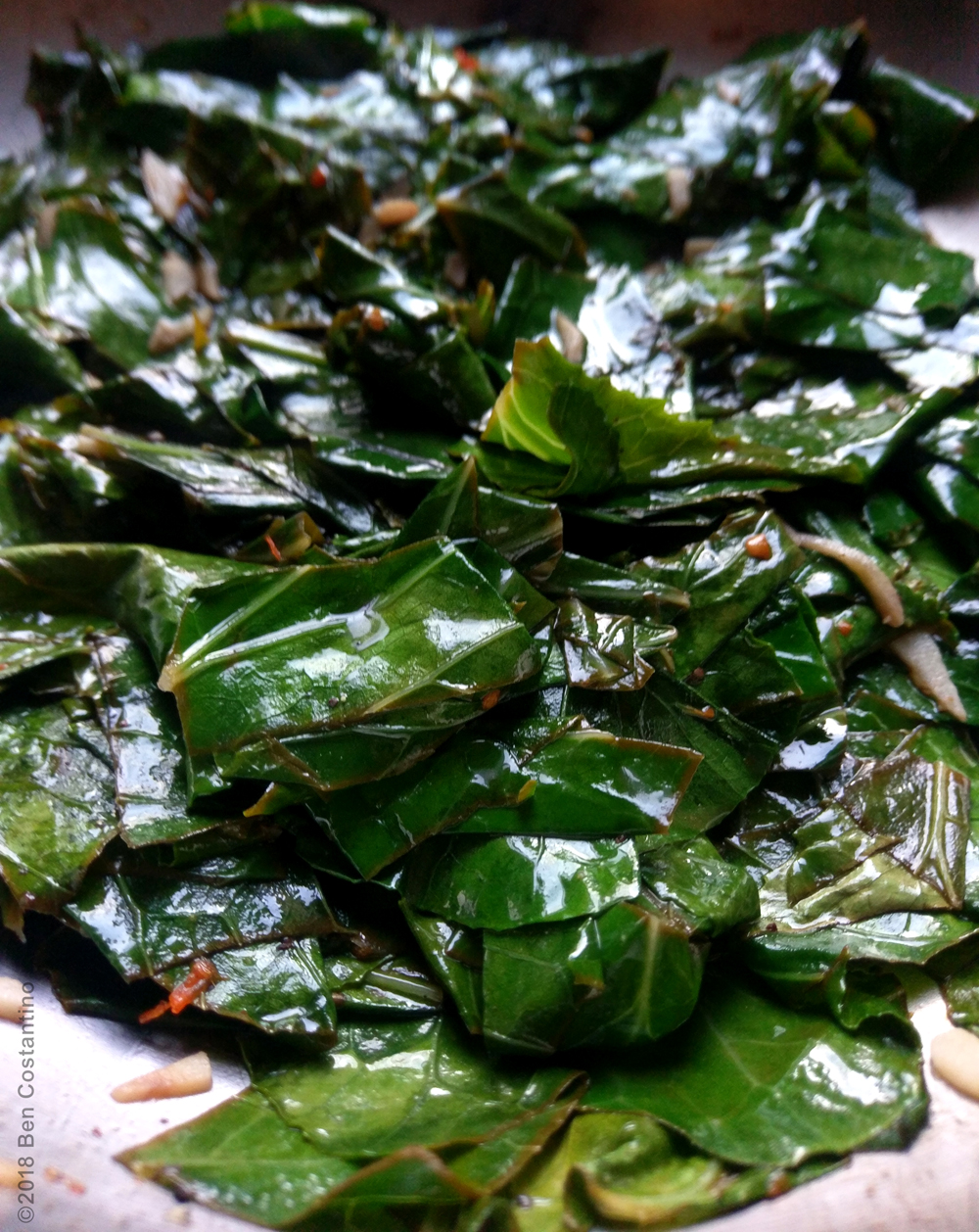
Try my sautéed collard greens recipe.
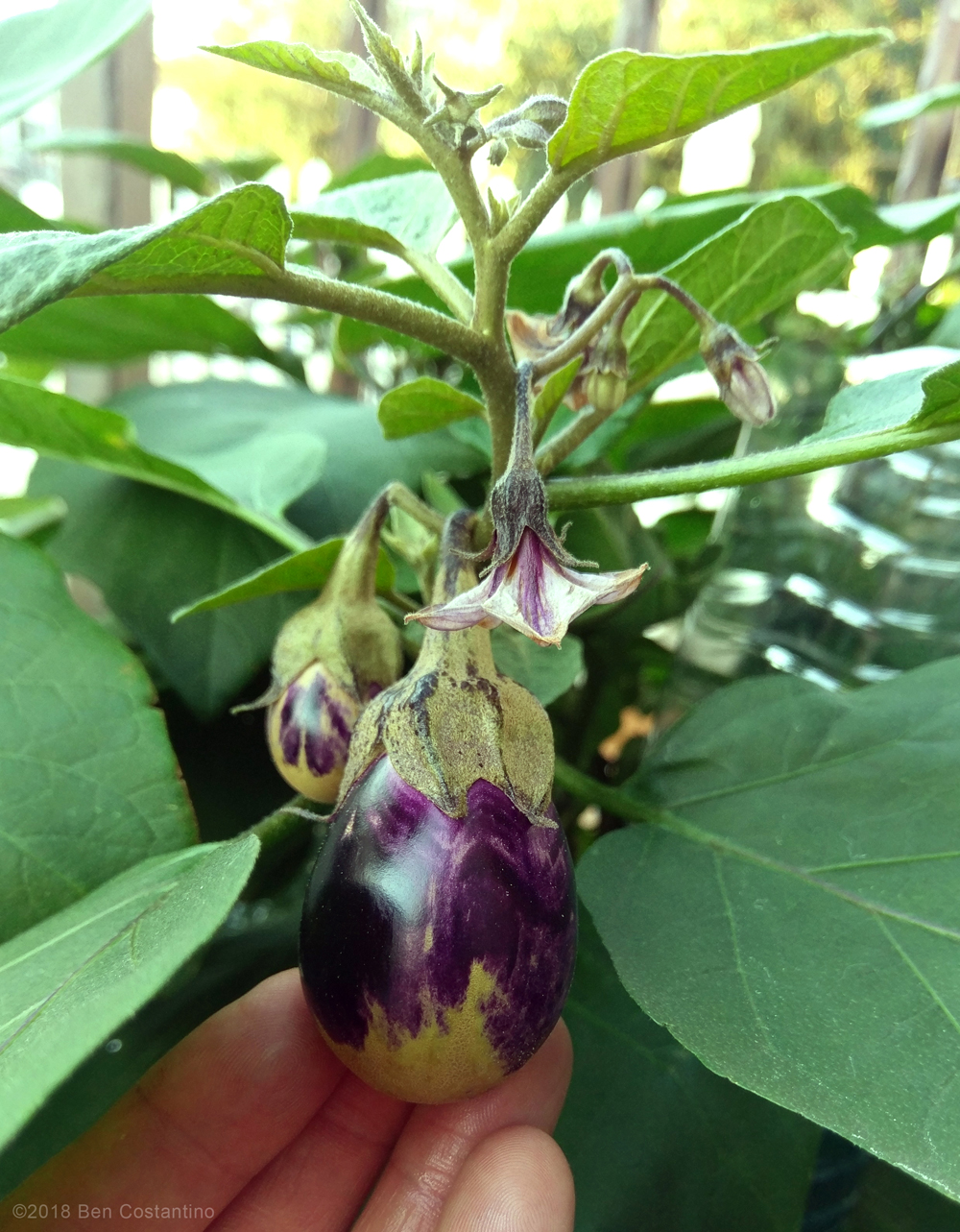
Harvest any eggplant when it looses the shone on its skin and has a little give when squeezed.
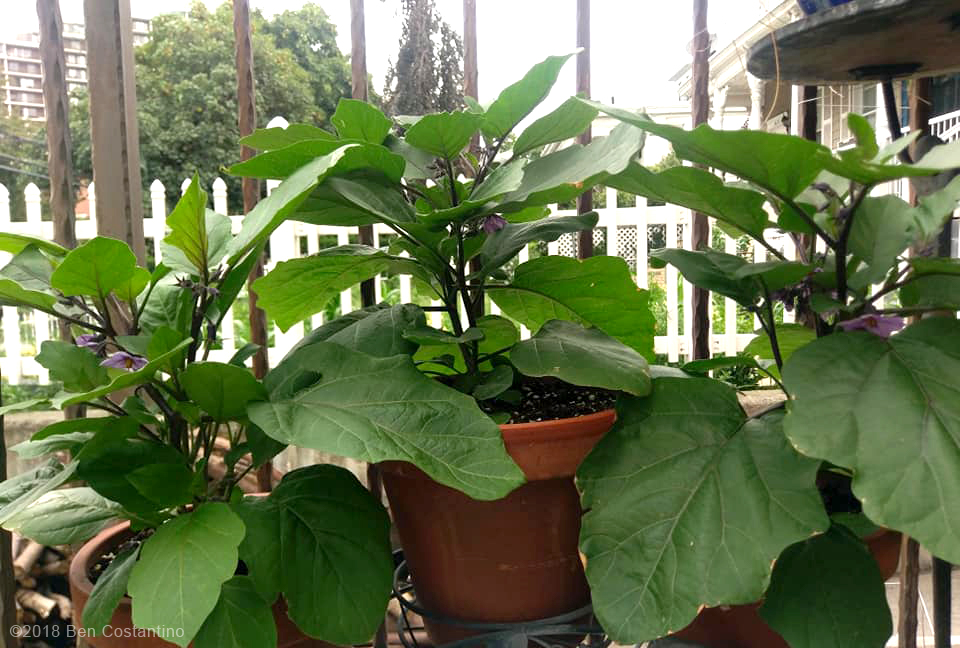
Typically you should grow baby eggplants in at least 3-gallon containers. These 9-inch clay pots were ultimately too small.