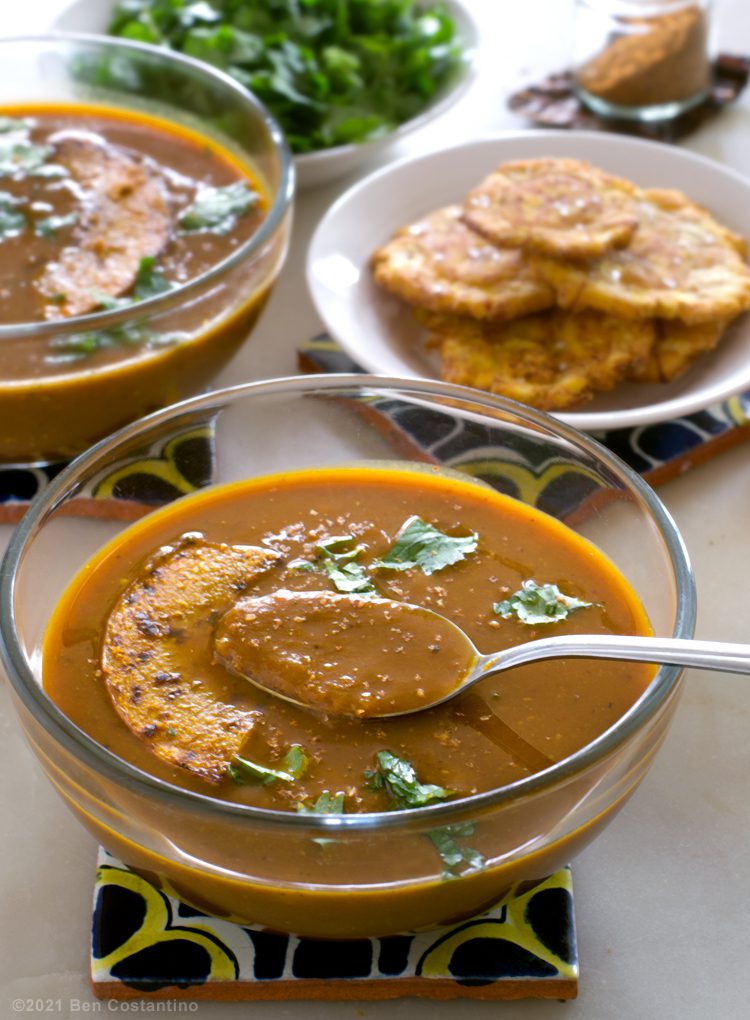

If you’re not a fan of the classic “American” pumpkin for pumpkin soup, consider switching to a Calabaza pumpkin, which is super popular in Caribbean Latin cuisine. It’s less watery and it tastes more like a butternut squash, which makes it a perfect ingredient for Fall cooking.
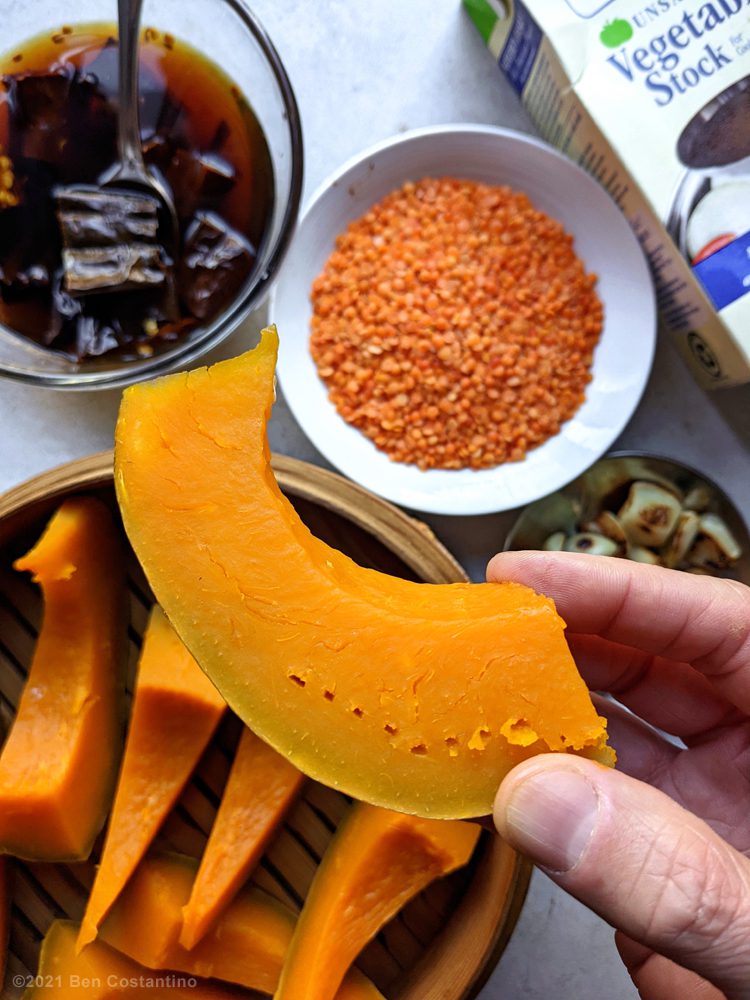
This soup is the result of merging two concepts I had been experimenting with. In my freezer, I had a batch of cooked red lentils that I accidentally made too salty, along with some previously frozen Calabaza pumpkin puree. Instead of wasting the lentils, I diluted the salt by simmering them in some unsalted veggie stock, then stirred in the pumpkin puree for a thickener. Before I knew it, this delicious pumpkin soup was simmering to completion.
To make this more of a “pumpkin” soup, I puree the lentils so they basically become a non-existent “blank canvas”, allowing the Calabaza to be the star of the show. To preserve more lentil texture, puree only half of the lentils. The lentils are also important because they’re super nutritious as a plant-based protein.
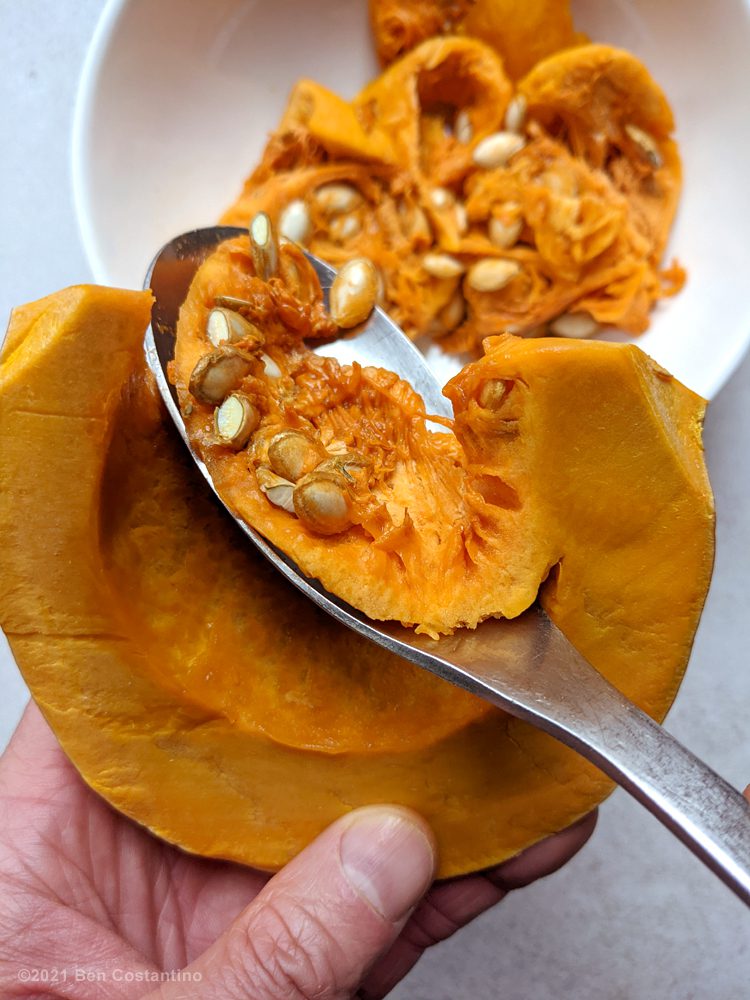
The seeds and inner flesh of the calabaza contain great flavor for a pumpkin soup stock.
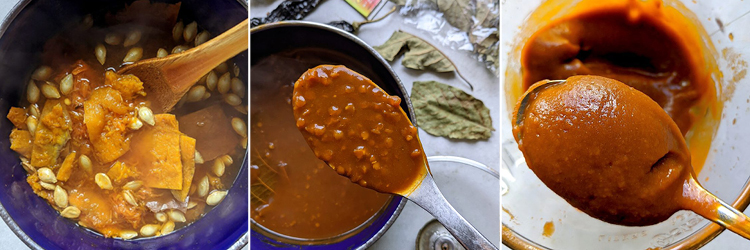
Flavor is extracted from the pumpkin seeds and flesh to create a stock for cooking the lentils, which is then combined with pumpkin purée.
You definitely need to watch the heat for this pumpkin soup at two key points … while roasting the garlic and simmering the lentils. Not doing so results in burnt garlic, which gives a bitter flavor that you don’t want in your soup. Also, lentils scorching at the bottom of the pot has a similar effect. Be sure to keep the lentils at a gentle simmer and stir them frequently. This will ensure that none stick to the bottom of the pan.
So let’s talk garnish for this pumpkin soup. Because calabaza is difficult to quantify and measure out, you might have some leftover pumpkin. Slice them really thin, brush them with olive oil, season with a dash of salt, and grill the slices in a skillet. It makes a fantastic garnish when served floating on the surface. Cilantro is a classic herb used to help bridge the flavors of Caribbean Latin, and Mexican cuisines. And here’s a fun fact about cilantro … it actually has Asian origins.
Make some Pasilla chile powder
When working with Pasilla chiles, you can control the spiciness of what you’re making by not including the seeds. Save the seeds, and grind them in a coffee grinder reserved just for spices. The seeds are super spicy, so use this powder to add some serious heat to individual servings. To clean and deodorize your spice grinder in between uses, grind some white rice and it will absorb all the residual flavors … a trick I learned from America’s Test Kitchen.
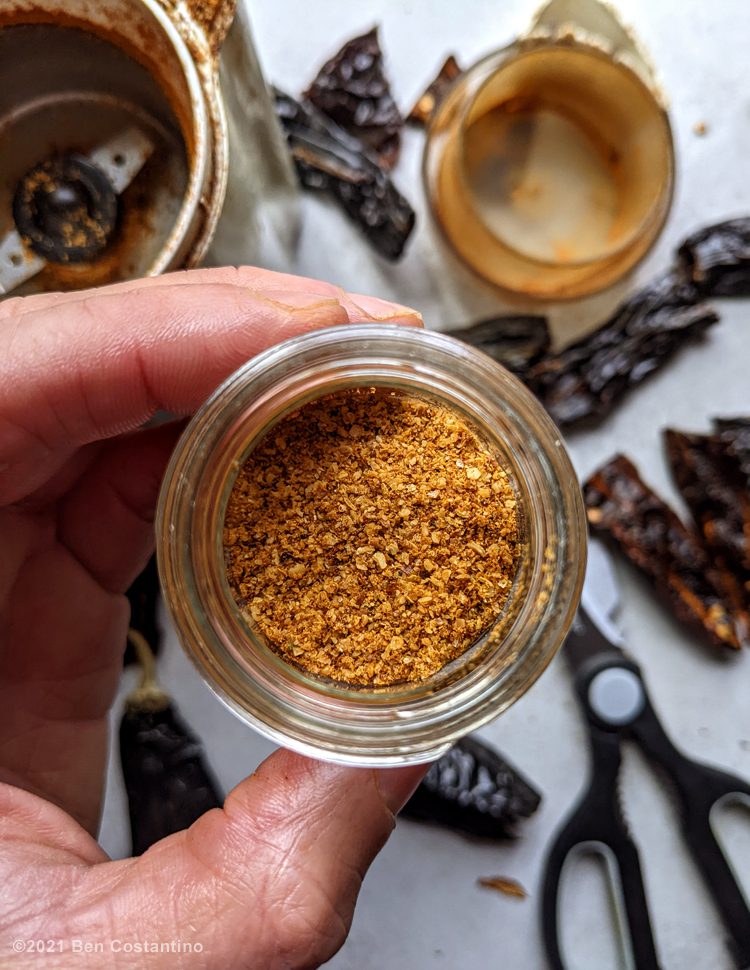
You can easily Make Pasilla chile powder with the extra seeds and inner ribs to deliver some heat to individual dishes.
Shallow fry some Tostones with your pumpkin soup
Serve this soup with a side of twice-fried green plantains (aka. Tostones) just like you would with bread or crackers. I first learned how to make Tostones from watching Chef Daisy Martinez. Typically they’re dipped in a garlic sauce called “mojo”, but dipping them in this soup makes complete sense as well.
 Pasilla Pumpkin Soup with Lentils
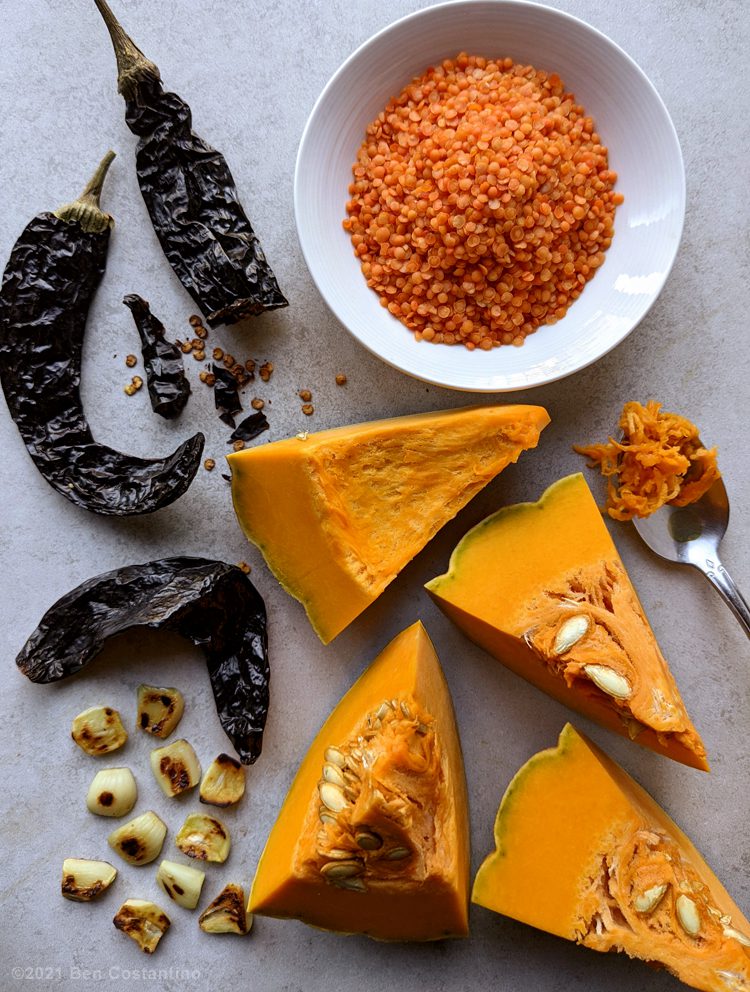

Ingredients for the pumpkin puree
- 2 pounds of calabaza pumpkin
- 2 large (3 small) Pasilla chile peppers
- 6-10 cloves garlic
- 2 cups hot water
Ingredients for the lentils
- 1 onion
- 3 cloves garlic
- 1 medium carrot
- 1 teaspoon black pepper
- 1/2 cup red lentils
- 3 cups veggie stock
- 1 teaspoon Mexican oregano
- avocado leaf
- 1 ½ teaspoons kosher salt
- 1 teaspoon honey

Instructions
- Cut the calabaza into wedges. Scoop out the seeds and interior “guts” and set aside. Load the calabaza wedges into a steamer and steam until you can insert a fork into the thickest part with no resistance and the skins fall off effortlessly. This likely takes 30 minutes.
- To roast the garlic you can do it either in a toaster oven, or on a hot skillet. For the skillet method, slice the garlic lengthwise into two flatter halves. Heat the garlic on a medium hot skillet until both sides are browned and cooked in the center. Or, in a toaster oven, simply brush the whole garlic cloves in olive oil and roasted them at 400 degrees until slightly browned, approximately 30 minutes.
- As steaming and roasting is going on, boil 2 cups of water in a small pot. Meanwhile, cut the Pasilla chile peppers crosswise into 1-inch pieces and add them to the boiling water. If you want a spicy soup, keep the seeds in the bowl. If you want it milder, discard all of the seeds. Once you add the dried peppers to the water, turn off the heat. Let them rest submerged the hot water for about 20 to 30 minutes to fully hydrate. Do not discard the pepper water.
- Remove the skins from the steamed calabaza. Add the skins and reserved seeds and inner pumpkin flesh to the pepper water, bring to a brief boil, and simmer for 30 minutes.
- Fill a blender, with the roasted garlic, steamed calabaza, hydrated Pasilla peppers, and 1 cup of strained pepper water. Purée this until smooth and add more pepper water to loosen the puree as needed. Transfer pumpkin puree into a bowl and set aside.
- To make the lentils, finely dice the onion, and carrot. Sauté them in olive oil over medium heat until the onion is browned slightly. Stir in salt, black pepper, Mexican oregano, and lentils. Cook a few minutes until the oregano is fragrant. Stir in the veggie stock and avocado leaf, scraping up any browned bits from the bottom of the pan. Bring to a brief boil, then simmer until lentils are tender, about 30 minutes. Allow them to cool.
- Once lentils are cool, purée them in batches in a blender. If you want to preserve more lentil texture, puree only half. If you want a smoother texture, puree them all.
- In a medium pot, combine pumpkin purée with puréed lentil soup, and additional one cup of veggie stock, and salt. Bring to a brief boil, then simmer gently for about 30 minutes. Stir in the honey and adjust the salt as needed.
Yield: 6 cups