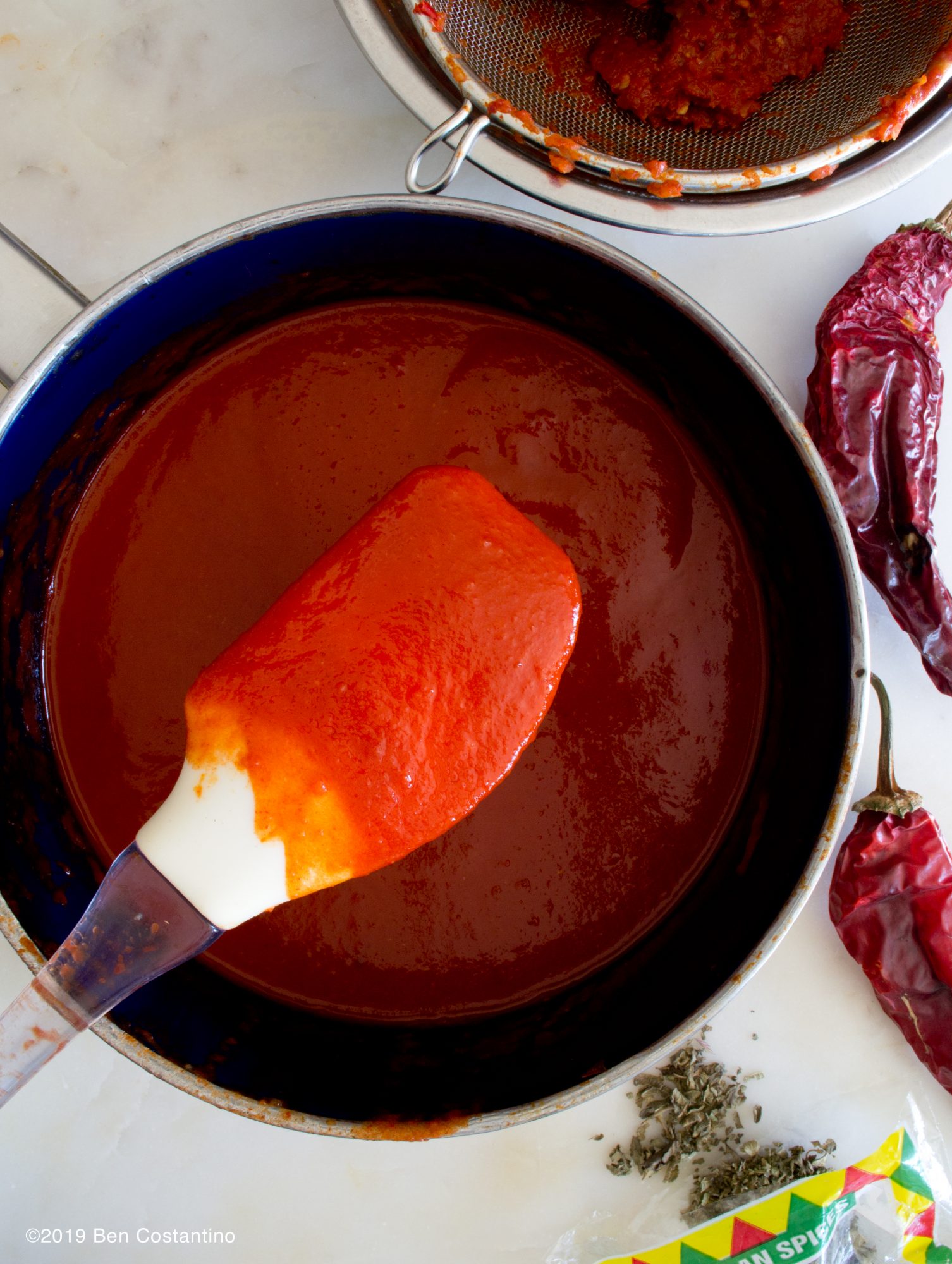

Making a really good red enchilada sauce is an extremely rewarding experience, and to be super honest … it can get rather messy. However, it’s the kind of “messy” classified as a bonding activity with your ingredients when you really love cooking. You don’t just make enchilada sauce because you want to eat, you also do it because it’s fun.
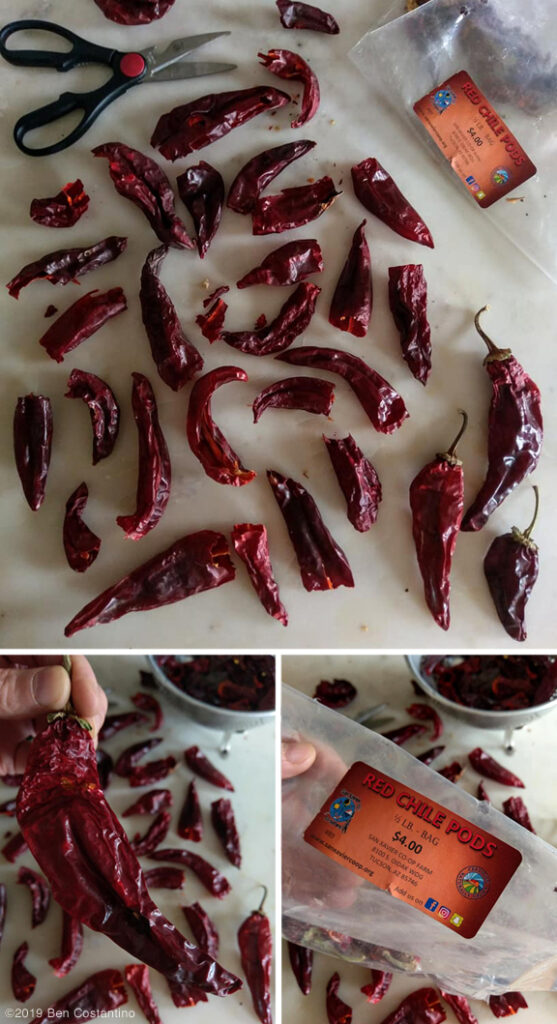
Red chile pods from the San Xavier Co-op in Tucson, Arizona
Making the enchilada sauce
When you want enchiladas, you typically want them immediately, and nothing about making enchilada sauce is quick and easy. Therefore, it helps to treat the sauce-making as a separate event. Sit back, relax, and make it a day ahead of time as a rainy day activity. Store it in the fridge overnight, and it also freezes very well for future use. The basic steps are quite simple … soak the chiles, roast your vegetables, throw them into a blender or food processor, strain the heck out of it, then add your stock and seasoning and simmer it a little to thicken up.
To achieve a smooth, silky texture without seeds, it requires some patience with a cheesecloth and/or fine mesh strainer. At the end, your kitchen can easily look like a horror movie scene if you’re not careful about constant cleanup. To avoid this, have a damp, bleached towel on hand to immediately clean up spills so your surfaces don’t get stained. You can also lay down some newspaper on your table or counter and work on that. Another way to avoid red chile stain and cleanup is to make my green sauce instead.
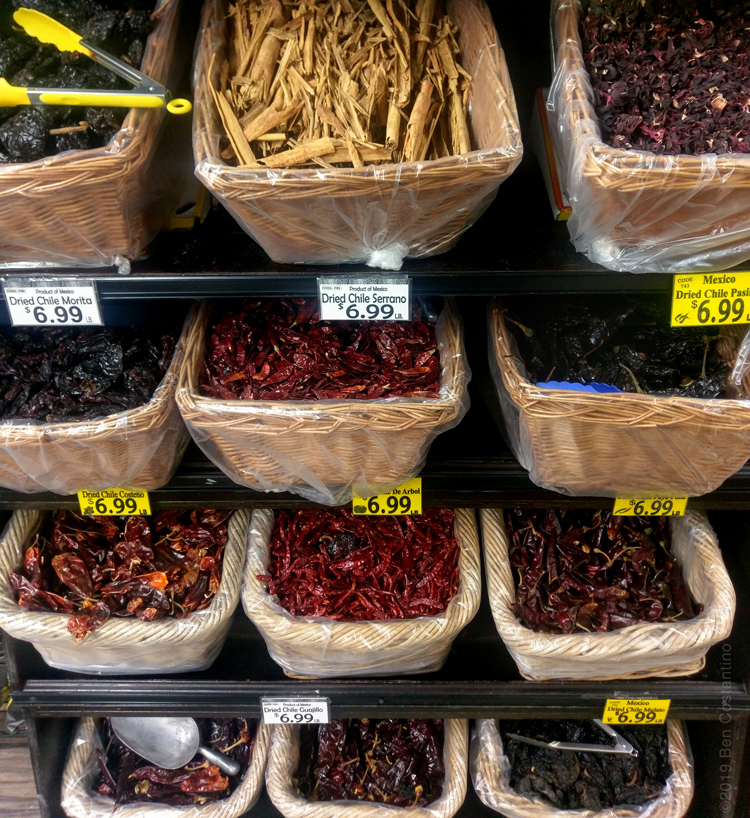
An assortment of dried chile peppers at Trade Fair market in Astoria, Queens, NYC.
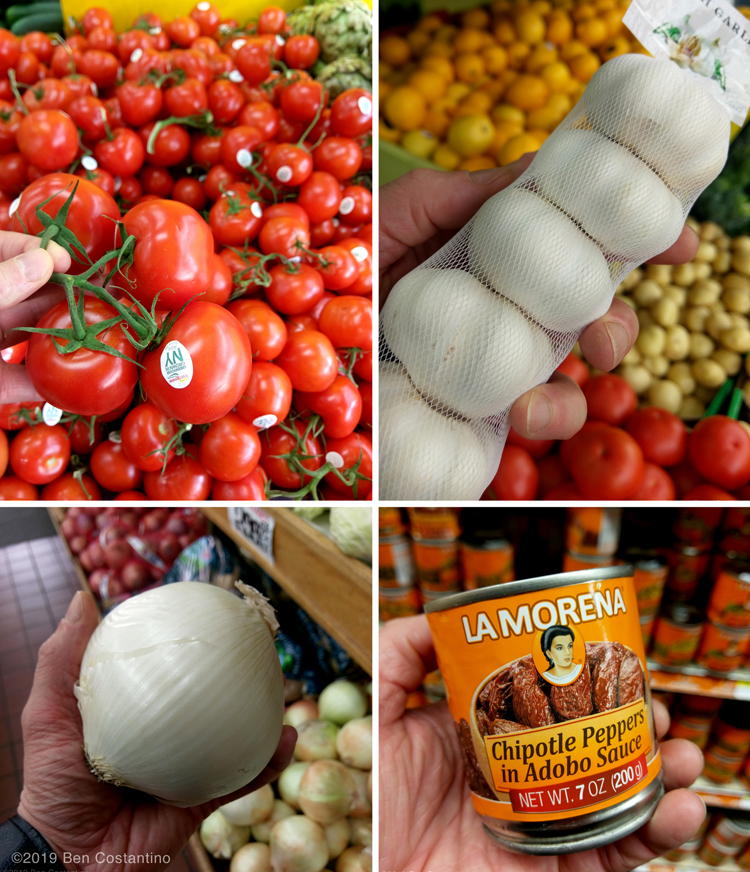
The four base ingredients (clockwise from upper left) are Vine tomatoes, garlic, a can of Chipotle peppers in Adobo sauce, and white onion. and white onion.
Making enchilada sauce is the most basic way to get to know the flavors of the different Mexican dried chile peppers. Use them to make chili and salsa.
 Red Enchilada Sauce

Ingredients
- ½ pound dried red chile peppers
- 10 cloves garlic, peeled
- 2 white onions
- 4 medium-sized vine tomatoes
- 7-oz. can of chipotle peppers in Adobo sauce
- 2 tablespoons of Mexican oregano
- 1 teaspoon of cumin
- 1 ½ cups of chicken or vegetable stock
- 1 tablespoon of apple cider vinegar
- 1 teaspoon of white sugar kosher salt to taste

Instructions
- Cut the stems off your chiles and shake out all of the seeds. If needed, you can make an incision lengthwise and open them like a drawer to also cut out the ribs and release any remaining seeds. If you want a spicy sauce, keep some seeds. If you want a mild sauce, simply don’t use the seeds.
- Place your dried chiles in a large pot and fill just enough to cover with water. Bring this to a brief boil, then turn the heat off. Let the chilis remain in the hot water for about an hour to fully hydrate.
- Preheat your oven to 400 degrees. Meanwhile, peel and cut the onion into halves or quarters, core the tomato and keep it whole. On a roasting pan, spread the garlic tomatoes, onions and garlic in one layer on a roasting pan. Coat everything with olive oil and sprinkle with kosher salt. Roast these for about 20 to 30 minutes until the onion starts to brown. Remove from heat and set aside.
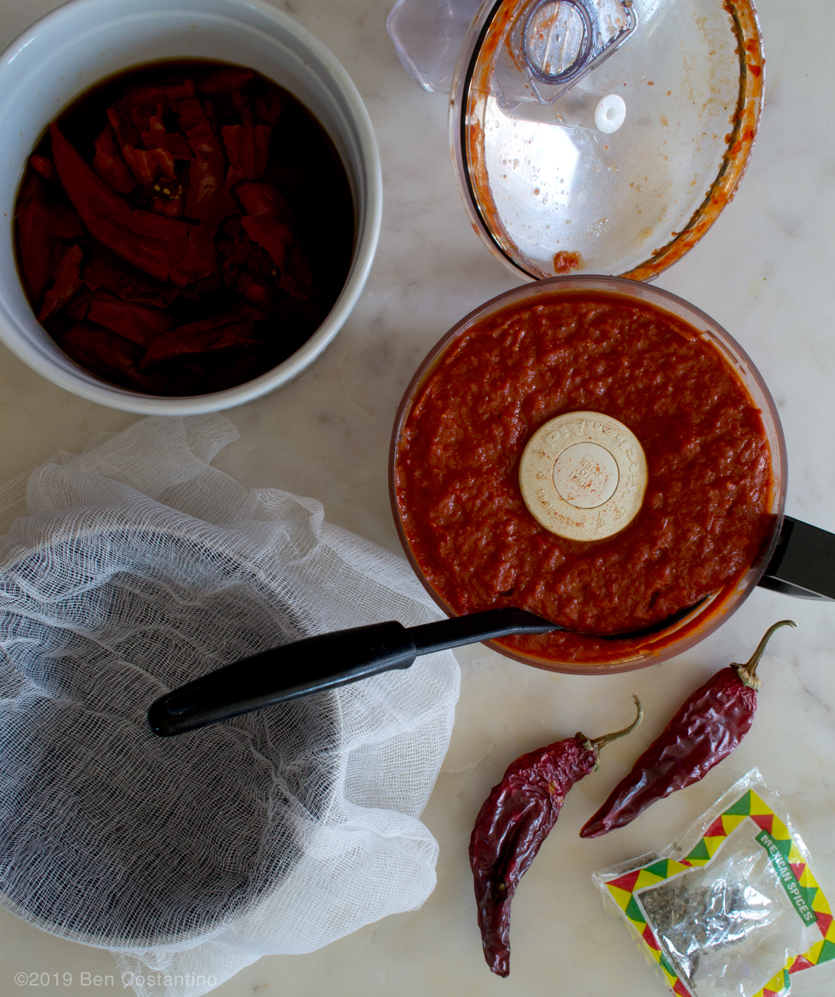
- Transfer into a food processor the hydrated chile peppers, roasted vegetables, and the chipotle peppers in Adobo sauce. Blend until everything is broken down into a chunky salsa-like consistency.
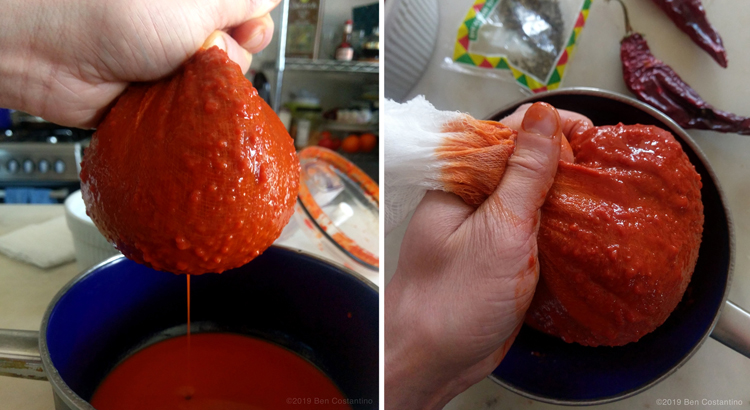
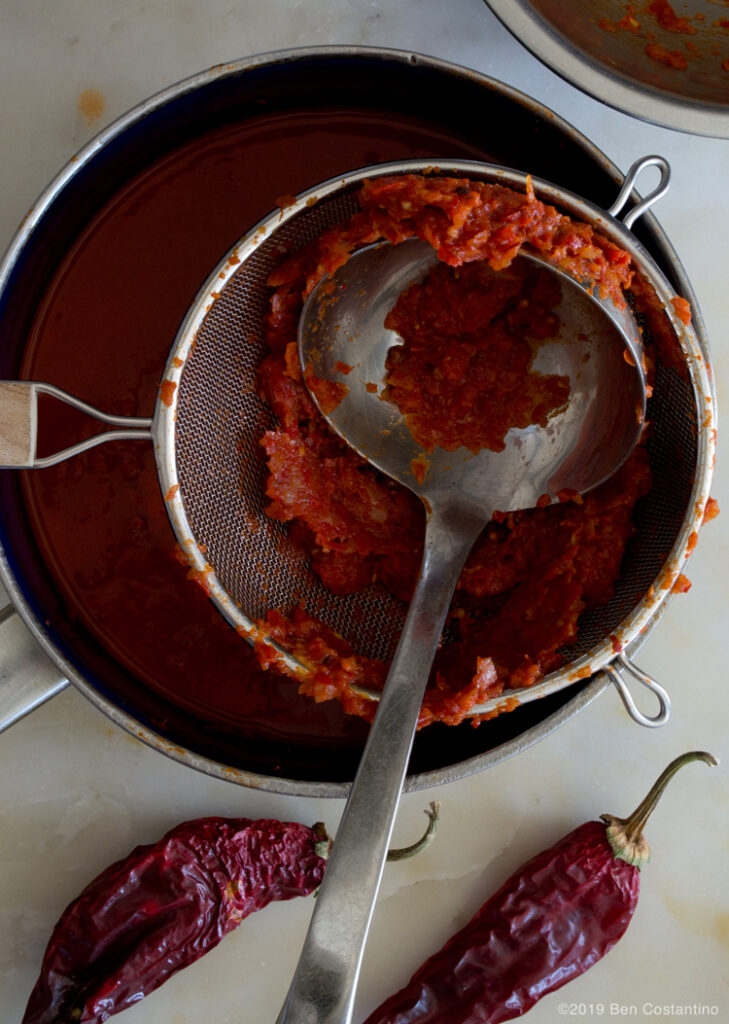
- Using a cheesecloth or mesh strainer, you need to extract as much liquid from this mixture as possible. Techniques for doing this may vary from kitchen to kitchen. Pour the blended mixture into a mesh strainer (suspended over a medium saucepan) in batches about 2 cups at a time. I suggest using a sturdy ladle to press out the liquid. No need to press hard, just keep a constant up and down motion to keep everything moving and you will soon be left with nothing but pulp.
- Once all batches have been extracted, transfer the saucepan to the stovetop. Add chicken or vegetable stock, Mexican oregano, cumin, sugar, apple cider vinegar and kosher salt to taste. Simmer this for about an hour, stirring frequently. This will thicken and cook down into an amazing sauce, and you’re done!
Yield: About 4 cups of enchilada sauce. If you like your enchiladas completely swimming in sauce, then double the recipe.
More about red chile peppers
When you shop for dried peppers, you might be overwhelmed by all the choices. The shopping process should be fun, not stressful. The fragrant aroma in the dried Mexican chile section really draws you in, and just like wine tasting, you have to try them out and explore. Smell each variety. Some are spicy and light, others are rich with a savory chocolate-like character, and some are difficult to describe. To make a red enchilada sauce, it’s good to have balance.
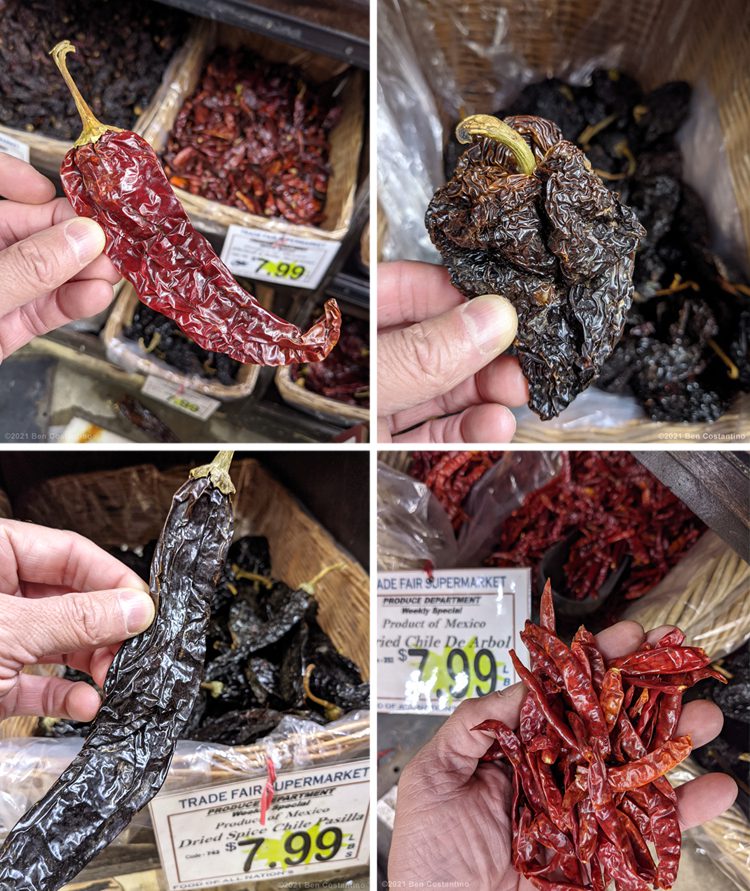
These are some super common dried chile peppers used in red enchilada sauce. Clockwise from upper left… Guajillo, Ancho, Árbol, and Pasilla peppers.
Ancho peppers are dried, young poblano peppers that are dark in color and mild in flavor, reminiscent of savory chocolate. Guajillos are earthy and medium-hot in heat. Árbol chiles are tiny but REALLY hot; they’re what you should buy if you really like spicy food, but use only a few in a sauce. Pasilla peppers have a rich, full-bodied, almost-smoky flavor similar to that of the Chipotle peppers. The popular TV personality, Chef Rick Bayless turned me on to Pasilla peppers from watching his video on Oaxacan Pasilla Salsa, so check that out.

Here is the process of seeding the peppers. This time I was using Guajillo and Ancho peppers. It was not a spicy sauce, needless to say.